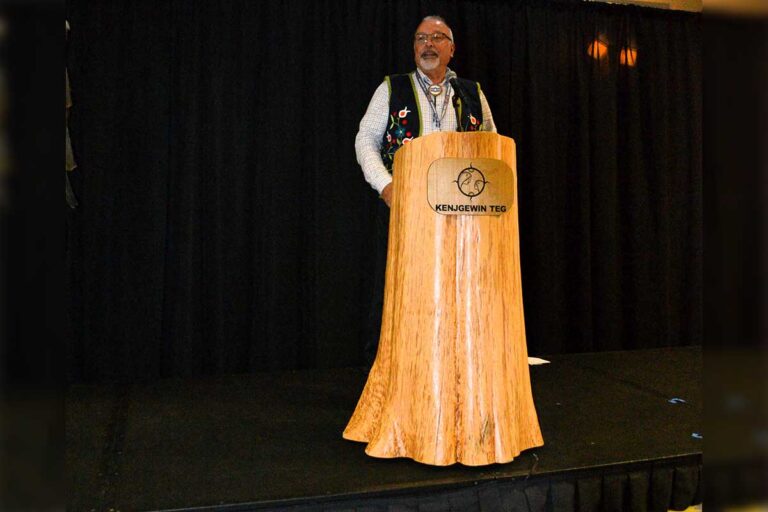
SUDBURY—On Tuesday, November 24, Kenjgewin Teg celebrated a momentous milestone by bringing together a diverse group of community members, students, Elders, partners, and educators in Sudbury. The event, titled Mshkogaabiwin: Affirming Sovereignty in Education, highlighted the significant achievement of obtaining accreditation for its Indigenous Studies Program – Certificate II by the Indigenous Advanced Education and Skills Council (IAESC). This accreditation not only acknowledges the program’s commitment to quality education rooted in Indigenous culture and values but also reinforces the importance of sovereignty in educational practices. Attendees shared stories, cultural performances, and insights, further enriching the celebration and emphasizing the role of education in strengthening Indigenous identities and communities.
The event was guided by Master of Ceremonies Brent “Mooselegs” Edwardson, whose energetic presence kept the evening lively and warm. Mr. Edwardson engaged the crowd with humour and movement, encouraging attendees to dance, playing musical introductions for honoured Elders, and reminding everyone of the gathering’s significance. “Let’s understand that tonight is all about celebration for a terrific accomplishment by the dedicated people at Kenjgewin Teg,” he said.
The Black Bull Moose Singers delivered an evocative cultural entrance to the proceedings, accompanied by a vibrant staff processional and soulful travel songs. Their voices together with tribal drumming began the festivities paying homage to tradition and spirit, infusing the celebration with a deep sense of reverence and connection to heritage.
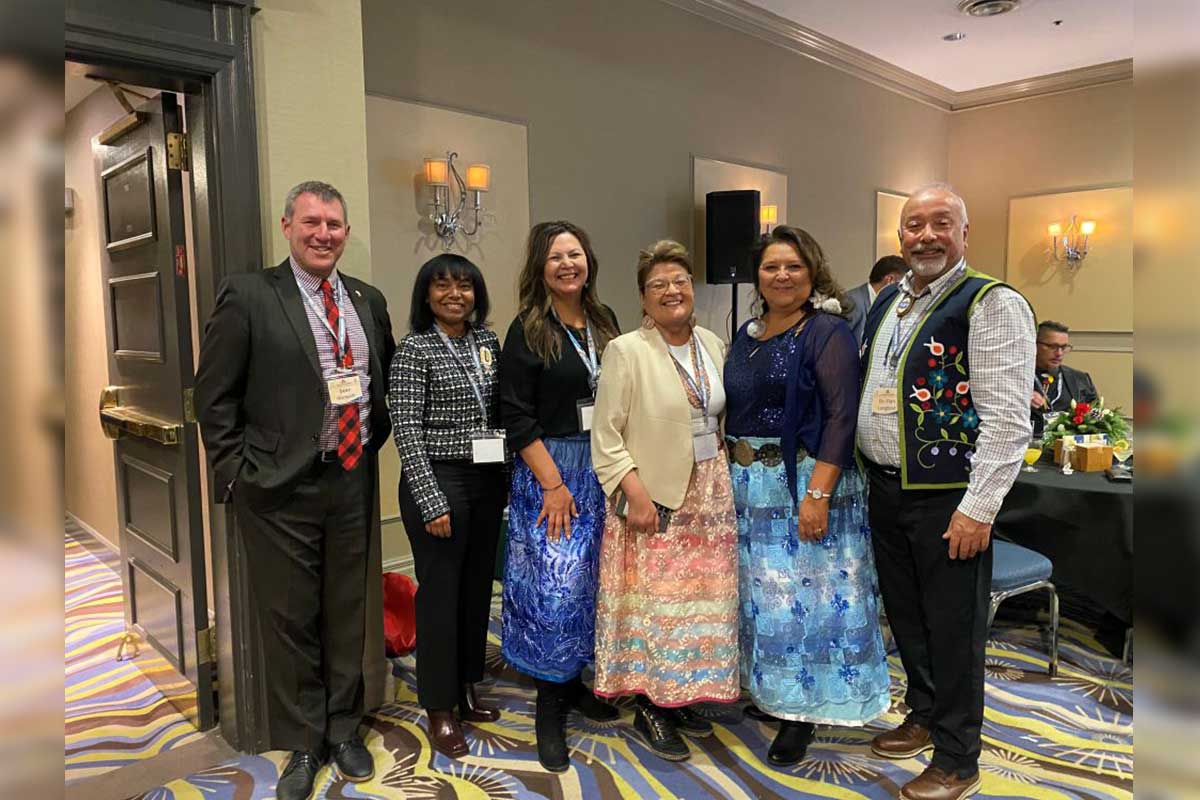
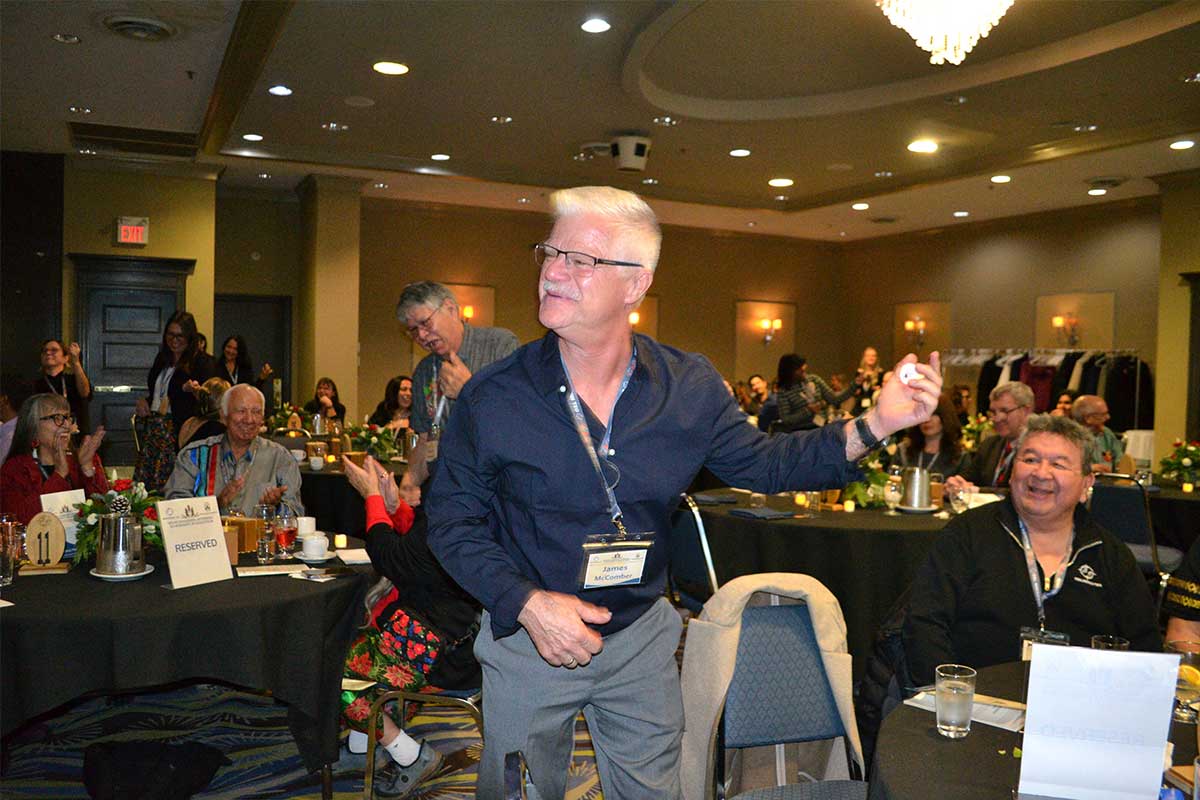
A number of respected Elders took the stage throughout the evening, speaking from the heart about the meaning of this victory for the community. They shared that accreditation is not only a formal recognition but also a continuation of the work their ancestors envisioned, rooted in protecting Indigenous identity, language, and knowledge systems. Several Elders reflected on their own experiences with colonial education and expressed pride in seeing an institution built by their people, for their people, receive this level of recognition. They emphasized that accredited Indigenous-led education ensures future generations will grow up with access to learning that honours who they are and where they come from.
The evening’s keynote speaker, Dr. Dan Longboat, added significant depth to the celebration with his insights and expertise. As a distinguished professor at Trent University and the founding director of the groundbreaking Indigenous Environmental Science/Studies program, Dr. Longboat has been a vocal advocate for the incorporation of Rotinonshón:ni Knowledge and Indigenous epistemologies within postsecondary education. He addressed the audience emphasizing that the emergence of accredited Indigenous education signifies not just an academic advancement but a transformative shift in how knowledge is recognized and valued in academic spaces. His remarks informed the guests of the importance of honoring Indigenous perspectives, which enrich both educational curricula and broader societal understandings.
“This development provides a fundamental chance for us to change education to serve our communities,” he said. “Education is important because it has to do with language. Language is the foundational component of any culture. If we lose our language, we lose our culture. If we lose our culture, we lose our ceremonies. If we lose our ceremonies, our ways of life end.”
He described the program’s accreditation as a commitment to cultural continuity. “This type of education means the continuation of our culture along with the creation of more leaders, more Elders, love, and kindness. It ensures the survival of our people.”
Turning to the evening’s theme, Dr. Longboat added, “We are gathered here tonight to talk about sovereignty in education. Some say sovereignty means independence or autonomy, but many scholars now say it is an entity’s right to exist. Through this accreditation and the delivery of this type of education, we are ensuring that very thing for our culture and people.”
IAESC Director Sean Monteith also addressed attendees. Known for his decades of work improving educational access for marginalized students, he spoke passionately about the positive impact of Indigenous Institutes across Ontario. He began with a simple question: “What is 82%?”
“That’s the percentage of graduates Indigenous educational institutions have produced every year,” he said. “And 65%? That’s the graduation rate of domestic students at other Ontario colleges.” The comparison, he noted, speaks to the success of Indigenous-led postsecondary education. “This is because Indigenous educational institutions ‘get it,’ many of the faculty have been where many of our students are.” This type of understanding leads to a greater sense of appreciation from both the students and the teachers. Mr Monteith also said, “I also believe that the reason for this high success rate is that Indigenous schools are truly in the business of students. Each student is seen as unique and important to the success of the whole. As such, they teach to the whole of the student.” “This differs a great deal from most Western educational institutions, who increasingly have only been concerned with enrollment rates” a practice he says has led many First Nations students to falter due to a lack of supports and cultural awareness from these institutions.
“It’s time to put action to the big ideas we’ve been working toward,” Mr. Monteith said. “I am proud of our students. Before these opportunities, our learners had to navigate being of two worlds. This accreditation is the beginning of realizing a theory of change that has been long coming. This education can transform our communities for the better and guide our youth toward becoming good human beings.”
Following the celebration, The Expositor spoke with Kenjgewin Teg President Dr. Beverley Roy, who reflected on the significance of the milestone and the work behind it. She noted that as Kenjgewin Teg continues to develop and accredit its own certificates, micro-credentials, diplomas, and degrees, its reputation will continue to grow across the province.
“There is a great opportunity for Kenjgewin Teg to help others who are also doing great work in education and training,” she said. “Balancing the accreditation of our own programs with supporting others will positively impact the results we collectively have in Anishinabek lifelong learning.”
Dr. Roy said students will benefit from expanded opportunities, including the future possibility of offering credentials in Anishinaabemowin and co-developing accredited programs with existing postsecondary partners. She explained that the accreditation process lasted approximately 2 years and involved internal teams that examined policies, practices, and areas for improvement, including establishing new policies to meet IAESC standards for learner wellbeing.
She emphasized that while accreditation often suggests external validation, the foundation for this achievement began long before provincial legislation. “Even before the Indigenous Institutes Act of 2017, the First Nation members of the United Chiefs and Councils of Mnidoo Mnising supported Kenjgewin Teg,” she said. “The Tribal Council issued its own charter resolution supporting our ability to issue our own certificates, diplomas, and degrees. This achievement has been a long-standing vision.”
As the evening unfolded and the last notes of celebration lingered in the air, attendees departed with a profound sense of pride, unity, and an unmistakable optimism that seemed to envelop the gathering. The heartfelt words spoken by the Elders, educators, and leaders throughout the night echoed in the minds of all present, making one thing undeniably clear: the accreditation of the Indigenous Studies Program – Certificate II represents not just a hallmark of academic excellence, but a powerful reaffirmation of identity, sovereignty, and the enduring resilience of the Anishinabek people.
In her closing remarks, Dr. Roy captivated the audience, her voice resonating with the shared emotions of her esteemed guests. She concluded her speech with a stirring quote from the revered Indigenous figure Murray Sinclair: “Education got us into this mess. Education can get us out of it.” The weight of the evening’s significance hung in the air, leaving an indelible mark on the hearts of those who gathered to celebrate this considerable achievement.