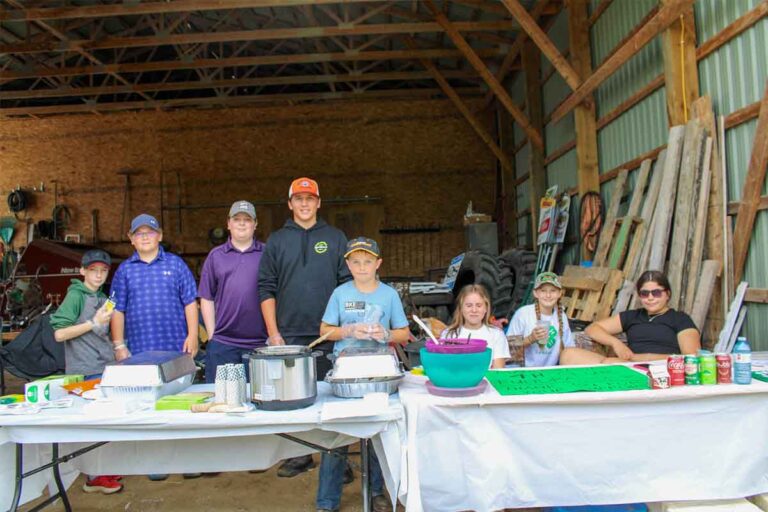
TEHKUMMAH—On Saturday, July 26, cars and trucks, mostly pickup trucks, in large numbers, headed down Smeltzer Road in Tehkummah and descended upon the Palace Hillside Farm. The air was hot, the excitement hotter, as Manitoulin North Shore and Sudbury West Federation of Agriculture hosted its first Ag Day “in many, many years,” said Bill Orford, organizer of the event and president of the local federation.
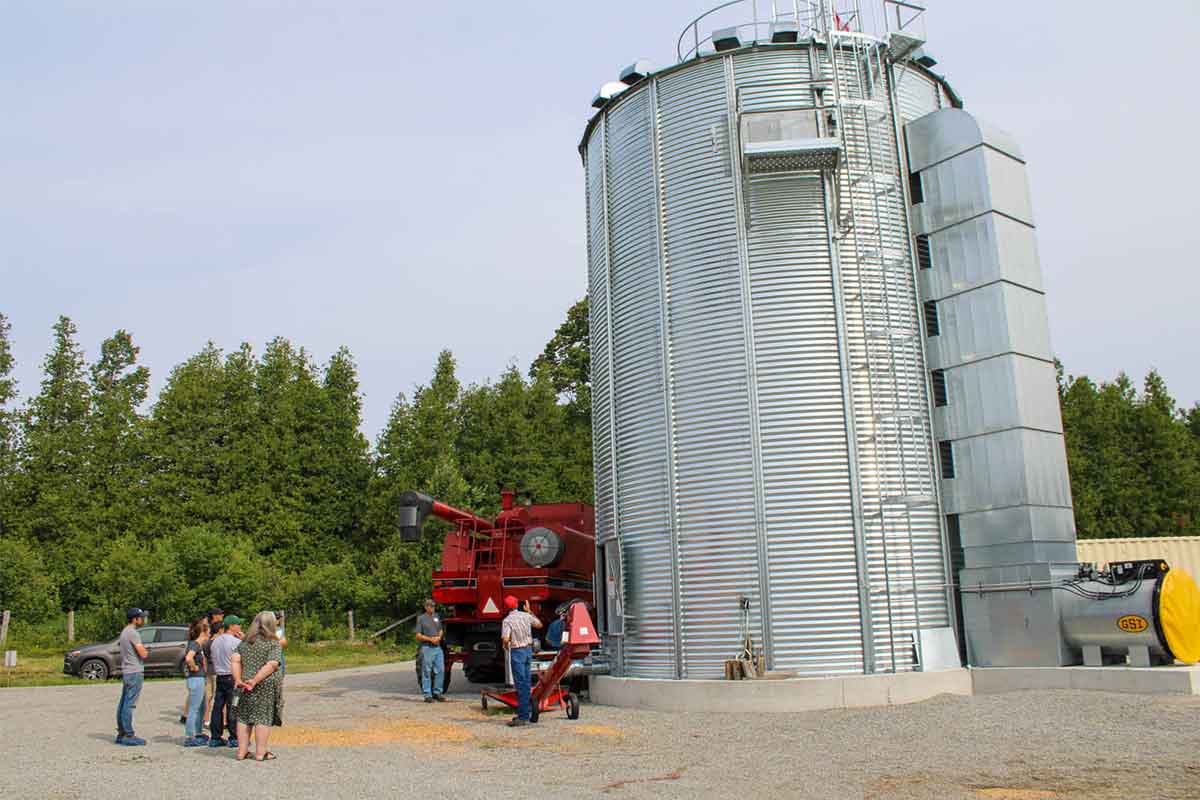
The host farm, owned by the Reneckers, Lyle, Teresa and their son, Johannes (aka Hannie), consists of hundreds of acres of farmland, both owned and leased. It was an easy choice as the location for the Ag Day event. “Part of it was they had a brand-new grain dryer,” said John McNaughton, also a board member for the local federation, “it’s only the second one on the island. And Hannie was wanting to show off the farm too, but mainly because he was also doing all the trials in the fields that are more innovative. I do trials myself, but I only do one or two at a time. Here he is, he’s got about a dozen out there.” And, with a sly grin, Mr. McNaughton added, “it also helps to be fresh out of school too.”
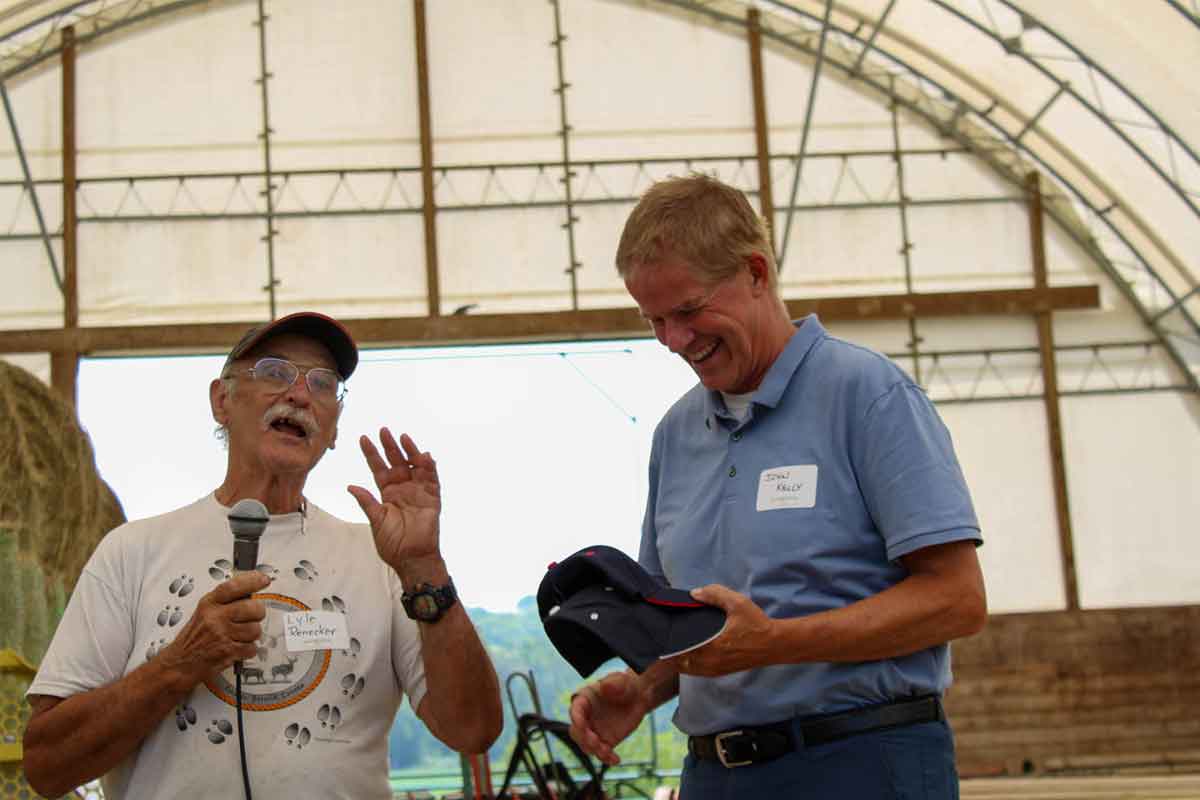
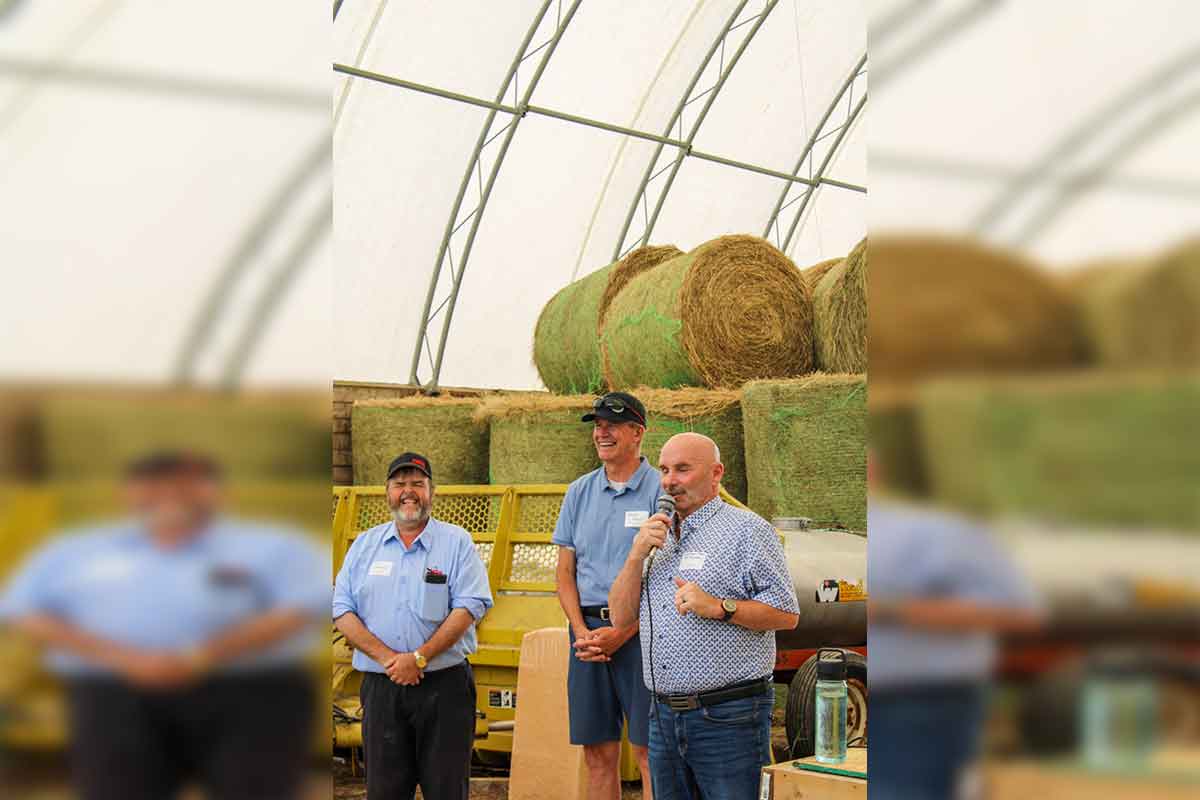
Bill Orford got things underway with a brief welcome and a thank you to the many sponsors, and an introduction of special guests, Deputy Minister of the Ontario Minister of Agriculture, John Kelly, MPP for Algoma/ Manitoulin, Bill Rosenburg, and the Northern Director of the Ontario Federation of Agriculture (OFA), Bill Groenheide.

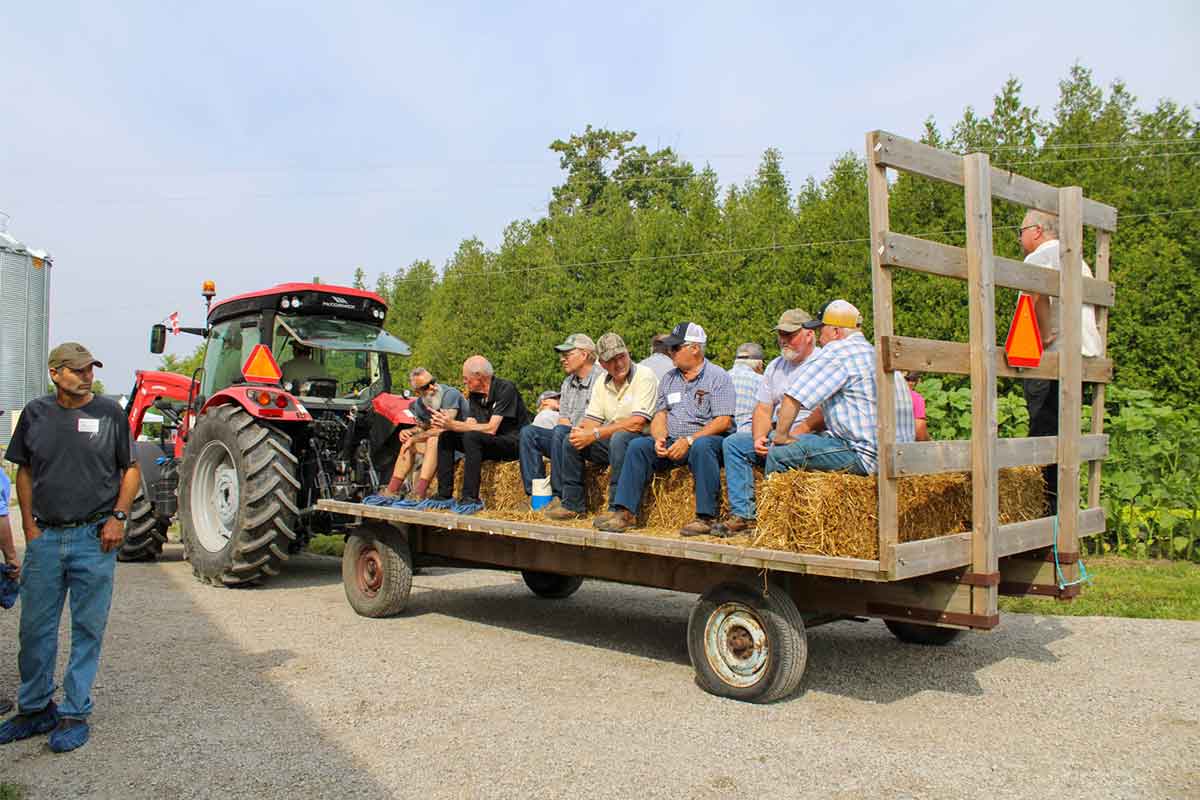
Next on the agenda was a crop tour of test plots and research trials on the Renecker farm. The plan was to take all interested parties out to the fields in two wagon loads pulled to the site by tractors. Those who couldn’t fit on the wagons would get their turn once the others returned. Unfortunately, the one tour lasted far longer than expected, cancelling the second group tour due to time constraints. However, those who were left behind, did not lose out. They were treated to a tour of farm machinery the likes of which many had not seen before and the very reason the Renecker farm is so proficient in crop management and innovation.
Hannie Renecker explained every piece of machinery in the yard, beginning and ending with the prided Top Dry Silo. “I’m a big believer in making a difference in the world,” he said at the start “and I don’t mind leading the charge on that one.” He went on to explain the intricate workings of the grain silo which would make great sense to the farmers among his listeners. The top dry has many advantages, one of the main ones being the use of far less propane in the drying process. “This is helping us be better stewards of the land, we are always improving our practices, helping to reduce the threats caused by climate change,” he said.
“We’ve got to think of every way we can, yes to make a profit, but also to preserve the land we have and increase yield at the same time we’re improving practices. In doing that, seed placement is a huge part of that, because you’ve got to think about the cost that goes into these crops,” Mr. Renecker said. Much of the innovation on the farm comes from state-of-the-art machinery, like the Lupin Leaf population monitoring system that measures the number of seeds going down per acre, using an infrared technology and costing about the same as a scale to put on a drill. But it reduces cost because the seed placement is reduced, thereby improving the germination of the seeds put down, not overpopulating with seed and resulting in a greater yield. “Canola costs about $1,100 a bag,” Hannie Renecker said, then he went on to explain, in detail, how he can get 15 rows out of the bag, rather than the traditional 10 rows. The young farmer was full of useful information for all who wanted to learn his farming practices.
When the tractors pulling the wagons returned, Mr. Orford was anxious to get the afternoon’s events underway. Seija Deschenes, coordinator of Manitoulin Streams, was first to speak, as she had another commitment to attend. Manitoulin Streams was in attendance because they are reworking and restoring a stream at the back of the Renecker property. Ms. Deschenes explained that Manitoulin Streams is a non-profit organization made up of a board of directors. They have helped restore many agricultural properties with streams or creeks in need of repair. In addition to explaining what practices are being used to bring the Renecker’s stream back to life, Ms. Deschenes said, “Because we are not-for-profit, we have to find all the money that we can, but Lyle also applied for the RALP program and received funding for wetland improvement as well as repairing and restoration.”
Everyone who spoke that afternoon had valuable information to share with farmers. Claude Péloquin from Ontario Seed and Crop Improvement Association (OSCIA) also spoke of the Resilient Agricultural Landscape Program (RALP) which provides funding to support Ontario farmers in making their agricultural lands more productive and resilient. Dr. Caio Correa, a plant pathologist from Ontario Ministry of Agriculture (OMA) directed farmers to gocrops.ca for data on performance trials, etc. Holmes Agro, one of the sponsors of the day, was represented by Taylor Legge and she shared one of their new innovations in the cropping industry—Enlist soybeans. What makes this product special is its herbicide tolerance. And the Reneckers had some growing in one of their test plots. Graeme Spiers, professor emeritus from Laurentian University spoke of soil health, and it being the cornerstone of life.
Bill Groenheide, Northern Director of OFA shared a bit of information with everyone regarding the Ontario Federation of Agriculture. “We’re 38,000 strong,” he said. That’s 38,000 farmers in 11 federations and 15 zones. “In the North there are different issues than in the south – big time. There’s weather, number one, there’s transportation and other things that happen in the north. I am one voice out of 15. So sometimes it’s difficult to get things on the table that mean a lot to us in the north. I get a lot of help from Bill (Orford) and other federations and that’s what I need when I go to the table, with your issues. So that is something that’s really good for me because I know that I have these federations standing behind me when I go there. It’s kind of neat when we get together three times a year. We all work together because we know we have to be strong when we go south. I am very, very happy to be part of this. I’m glad Bill invited me to come here. My wife and I traveled 12 hours to get here, from Thunder Bay. It’s a big area, but believe me it’s well worth it to meet you people, to talk about farming and to see what you’re doing on Manitoulin. Every time I come here, I’m blown away.”
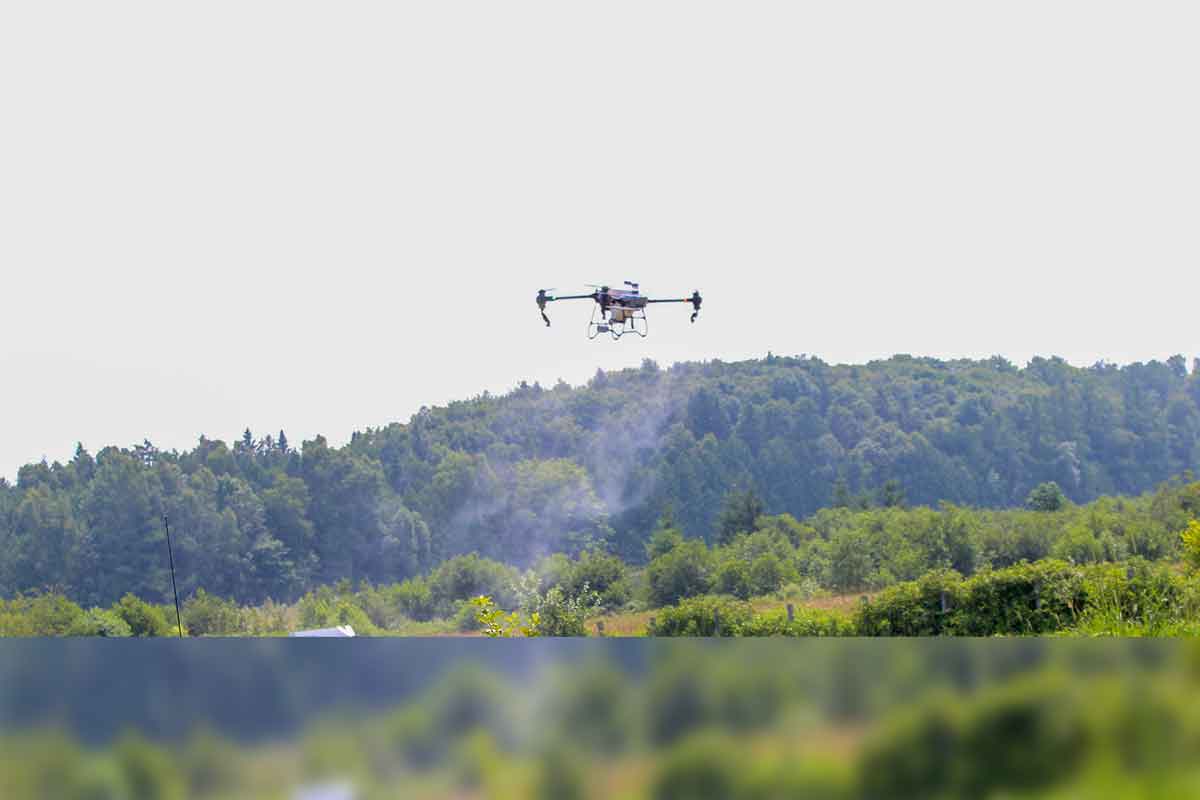
Mr. Orford thanked the Renecker family for the use of their farm, but also for all the work they had put into preparation for the day and gracious hospitality. The last speaker of the day was Jenny Chen from Wonderfull Inc. which is a company based in Innisfil. Since 2019, Jenny Chen and her team have been among the first to promote and sell DJI agricultural drones in Canada. Ms. Chen spoke of the many uses and benefits a drone can provide in modern farming practices. The piéce de resistance came when everyone followed her out of the coverall and into the field where her partner was ready to demonstrate one of largest drones seen in these parts, its speed and distance capabilities as it sprayed water over the crops.
The entire day was filled with opportunities to talk, to listen, to learn different practices and to meet new people. Farmers did listen, learn, talk and share, and there’s no greater proof of a successful Ag Day than that.
by Margery Frisch