NAIRN CENTRE—There’s a billboard coming soon to Highway 17, but don’t expect it to advertise fresh eggs or firewood. Instead, it’ll be a warning. A cry from the crossroads.
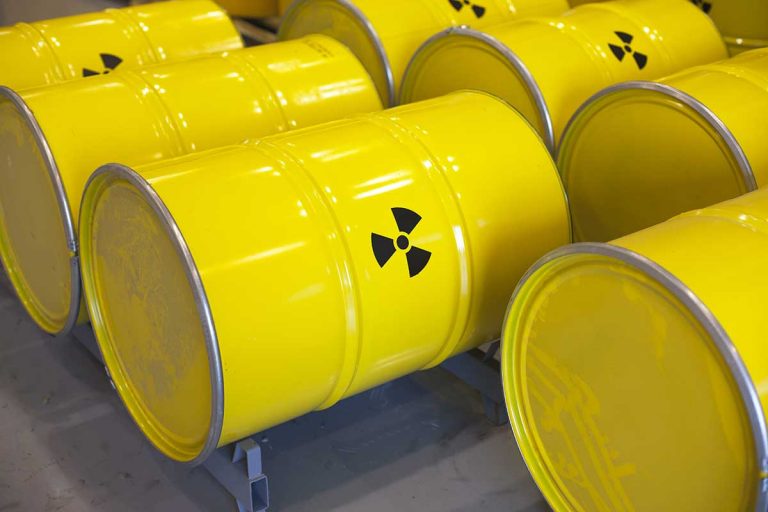
In the Township of Nairn and Hyman—better known as Nairn Centre—the people have been handed a binder full of questions and a province full of silence. At a recent public meeting, frustration boiled over as residents learned that radioactive niobium tailings from a former mill site near Nipissing First Nation may soon be trucked into their backyard—bound for the old uranium mine at Agnew Lake.
“They told us we were consulted in June,” says Mayor Amy Mazey, shaking her head. “But that consultation was a page-and-a-half long. An email.”
The plan, spearheaded by Ontario’s Ministry of Mines and the Ministry of Transportation, involves moving contaminated material—tailings with traces of radium-226, cadmium, arsenic, selenium and other heavy metals—into a mine site that hasn’t operated since the 1980s. The province insists the project is low-risk. But according to Mayor Mazey, that’s a claim built on shaky ground and missing studies.
“We had to take the materials to an independent environmental firm, Hutchinson Environmental,” she explains. “They reviewed it all and said it seems low-risk—based on the info provided. But eight key studies are missing. Eight. Including the cumulative risk assessment. What happens when uranium residue and niobium tailings mix in the same place? Nobody knows. That’s not good enough.”
One of the missing reports is a Human Health and Ecological Risk Assessment—the kind of document that’s supposed to reassure communities before radioactive material starts rumbling down local roads.
“Radon gas, for example, comes from radium-226. It’s not in the middle of our residential area now, but it doesn’t need to be. It can enter the food chain through burrowing animals. Who eats those animals? What happens next?”
Mayor Mazey, who jokes that she didn’t sign up for “a niobium crisis” when she agreed to serve as mayor, has been fielding calls, emails and questions that she says should have been answered long before any trucks were queued.
The public mood? “Outrage,” she says. “People are organizing letter-writing campaigns. We’re launching a hashtag—#No_Niobium. This isn’t fear-mongering. It’s self-defence.”
The site in question—Agnew Lake Mine—operated as a uranium mine until 1983. Though no incidents have been reported in the decades since, the site has been quietly holding radioactive waste for years. Now, residents say they’re expected to trust a project with incomplete data and questionable oversight.
Even the chain of communication has been murky. “We learned more from Nipissing First Nation’s website than we did from our own government,” Mayor Mazey says.
And though the province claims the transport and containment plan is legal and follows existing environmental regulations, critics are raising alarms about the speed of the process, the lack of clear cumulative data, and the broader trend of environmental “streamlining” currently sweeping through Queen’s Park.
Mayor Mazey says her initial calls for support from neighbouring First Nations were met with support but that since then she has been unable to reach what she views as important allies in this fight for ecological safety.
For now, no formal protest has been announced, though the mayor hinted that community action could take place if the plan moves ahead as anticipated in mid-August. Final approval is pending from the Canadian Nuclear Safety Commission, which had previously flagged drainage and storage concerns.
“We’re a small town. Three people in our office. No communications team. No spin,” Mayor Mazey says. “But we have our voices. And we’re not afraid to use them.”
