
WIIKWEMKOONG—In July 2024, this newspaper reported on the return of Ojibwa Spirit Horses, also known as Lac La Croix Indigenous Ponies, to Wiikwemkoong, marking the first time the endangered breed had been reintroduced to the community. The horses are part of Canada’s only Indigenous horse breed, with fewer than 200 remaining worldwide. Their decline is attributed to habitat loss resulting from settlement and industrial agriculture, the absence of formal recognition as a distinct breed, and Canadian government policies that disrupted Indigenous land use and traditional practices, including horse husbandry.
By 1977, the population had been reduced to only four surviving mares, placing the breed on the brink of extinction. That same year, community members from Lac La Croix and Bois Forte transported the remaining horses across a frozen lake to a private property in Minnesota to prevent their loss. A breeding program was later established using Spanish Mustang stallions to preserve the genetic line.
The current horses arrived under the care of Marcia Manitowabi, MSW, following several years of planning aimed at restoring an Indigenous horse presence within Anishinaabe territory. Ms. Manitowabi was presented with three mares named Lucy, Three Sisters and Thundercloud, along with a gelding named Kind Moon Dancer (Giizis), who were welcomed through ceremony. Since then, Ms. Manitowabi says both the program and her own role within it have continued to evolve.

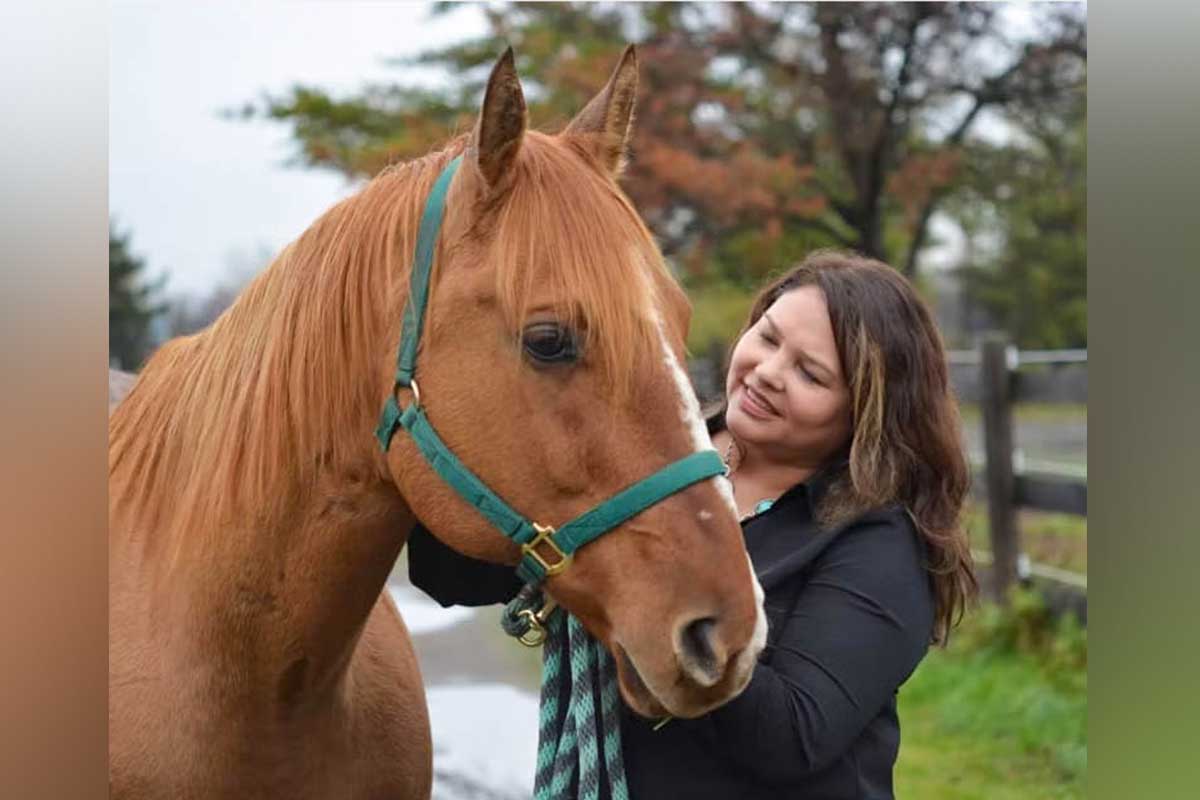
When talking about the origins of her program, Ms. Manitowabi shared “This entire thing started because of the work I did with a young boy at Shkagamik-Kwe Health Centre. He was about 10 years old, and I wasn’t seeing a lot of progress with him in a traditional clinical setting.” She said the experience led her to reconsider how healing work could be approached.
“I’m a spiritual person, so I began praying for a way to help him,” she said. “I later discovered the equine and animal focused approach, got him involved, and immediately started to see progress. I finally saw a big smile on his face while he was working with horses.”
Ms. Manitowabi said the experience was both enlightening and formative, both professionally and personally. “As luck would have it, I was gifted two horses, despite not knowing anything about horses at the time,” she said. “From there, one positive thing kept happening after another. I’ve been open to all of this, and it’s really changed my life.”
Since bringing the Ojibwa Spirit Horses to Wiikwemkoong, Ms. Manitowabi said interest in the program has steadily increased. “Since we last spoke, I’ve had a lot of visitors come to see the horses for various reasons,” she said. “Mainly because I run several equine-assisted groups for people who might benefit from the experiences they can get here.” Ms. Manitowabi’s practice is called Reflections – Nanaandwejgejig Bezhigoogizhiik (Healing Horses).
She told the Expositor that visitors have travelled from across Ontario and internationally to learn more about the horses and learn about and experience the programming offered here. “People have come from all over the world, and that has led to me expanding the work into tourism,” she said.
Journalists from Australia visited the site this past September and are preparing a feature for a Qantas tourism publication about this program. Ms. Manitowabi also hosted a visiting cultural anthropology student from Japan, who plans to return in the spring for her post-graduate research, and one of her fellow researchers is from Australia who works with their Aboriginal communities. “She came here to work with us on a fellowship.”
“We’ve also had people coming from closer, like Toronto and the surrounding areas,” she said. “More people are learning that we aren’t just about therapy groups.” In addition to public and therapeutic programming, Ms. Manitowabi said the initiative has developed partnerships with local law enforcement. “We’ve also begun working with local law enforcement,” she said. “We recently partnered with the UCCM Anishinaabe Police in delivering the Maamwi Noojmodaa Program.”
The Maamwi Noojmodaa Program is an alternative justice initiative focused on minimizing victim impact and supporting accountability among adult Anishinaabe offenders through restorative justice and culturally based approaches. The program was started because it was recognized that many Anishnaabe offenders have also experience traumatic experiences and trauma over the course of their lives. Ms. Manitowabi said participants in the program have the opportunity to engage with the Ojibwa Spirit Horses which, she says, have a very calming and soothing presence.
“In this instance, they get to come into contact with ancestral horses which have always held spiritual significance for the Anishinaabe people,” she said. “So far, we’ve held roughly 12 sessions for the Wikwemikong Tribal Police Service, and we have four sessions scheduled with UCCM,” she added. “The results have been really impressive.”
Ms. Manitowabi explained that all her sessions typically begin with ceremony. “Our sessions start in a sharing circle first,” she said. “We open with a smudge and prayer and set our intentions for our day.”
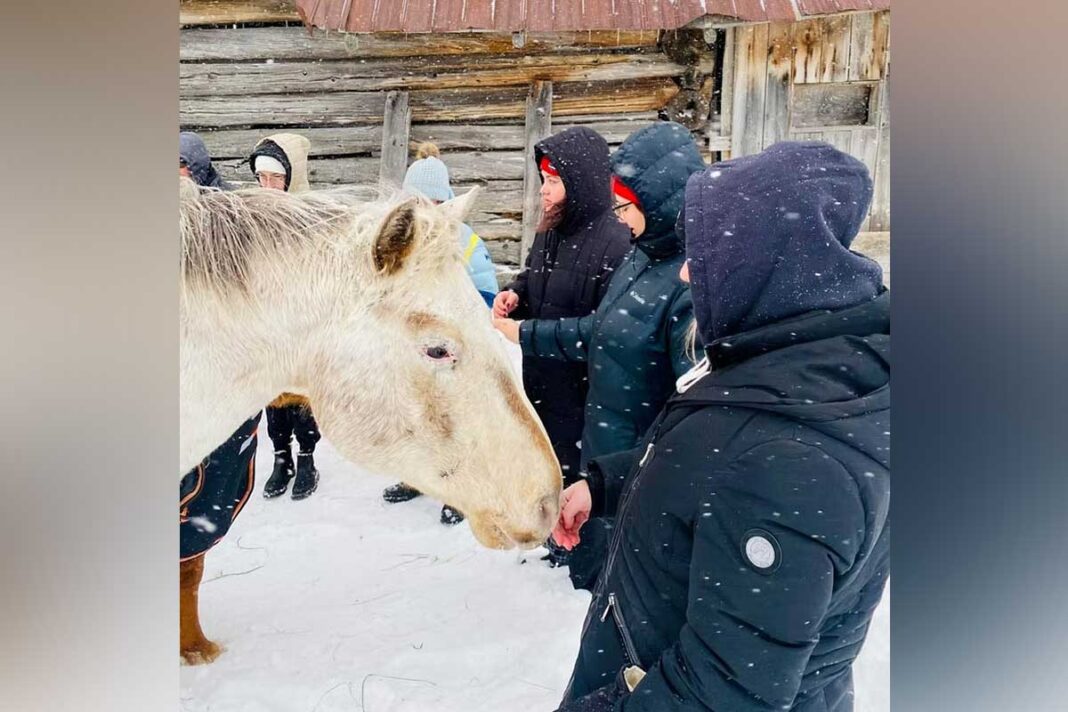
She said that participation in these sessions does not involve riding but instead focuses on interaction and care for the horses. “The sessions are often just between the horses and the participants,” she said. “Afterward, they’re given the chance to share the things they experienced or what they shared with the horses. Most often, these are stories of healing.”
Alongside these traditional ceremonies and teachings, Ms. Manitowabi also incorporates contemporary therapeutic methods, including cognitive behavioural therapy (CBT) and eye movement desensitization and reprocessing (EMDR) to further assist people dealing with trauma. It serves as a unique approach which melds traditional modalities and approaches, with modern clinical modalities to create a complete form of therapy.
“This process is holistic,” she said. “The participants get to feel the horses’ spirit, and the horses feel them back. The horses seem to know that the people are coming to get help. The horses will come and approach the participants – most often the person who needs it the most.” These deeply intimate interactions with the horses, she says, helps the participants in the processing grief and letting go of past harms. “These programs are giving people the opportunity to connect back with the land and our traditional animals. And we share teachings about the horse culture.”
“Many Elders from various communities have also started visiting too and they are asking for healing as well. The contact with the ponies helps in awakening our spiritual selves. The work is sacred and I’m a witness to how effective and beautiful the process is. I often can’t believe what I just saw. It takes me a moment to appreciate these experiences.”
Youth programming focuses on hands-on activities such as grooming, haltering, walking and caring for the horses. “When we work with kids, they do more hands-on things,” she said. “They help with grooming, feeding and caring for the horses. The kids are always asking ‘When are we going to get a chance to ride them?’, which is understandable.”
While riding is not currently part of the program, Ms. Manitowabi said it may be considered in the future if appropriate training can be arranged. She is currently working with her teacher and mentor, Patrick Buffalo of Healing with Horses in Alberta, to explore options for training the horses. “I did my practicum with him and his service and learned so much. If we can get a trainer here to help prepare the horses for riding, we’re going to do it,” she said. “It hasn’t been easy, but we’re trying.”
Ms. Manitowabi is currently completing a PhD in animal-assisted therapy through Trent University. She said she expects to complete the program within the next two years, pending ethics approval and for the subsequent research portion. “It’s been challenging working full-time while doing my academics,” she said. “But I was able to secure funding, and that’s not easy, so that’s made things more manageable.”
Looking ahead, Ms. Manitowabi said her long-term goal is to support training opportunities so similar programs can be developed elsewhere. “My goal for the future is to train people so they can bring this work back to their communities,” she said. “I want people to know that there are Indigenous people doing this kind of work.” Word has been spreading and she has begun to make inroads with various community stakeholders. “Since the program began, I have been asked to talk at the Adler School of Psychology in Toronto and I have been to the University of Alberta to speak with some of their mental health program faculty.”
When asked what she wants most going forward, she replied “I want people to be open to this experience if they are unsure. A lot of people aren’t sure about what I’m doing, so they don’t see any value in it until they participate and engage with the animals. It’s really a spiritual experience and awakening. Anishinaabe are a spiritual people but because of our challenging past and colonialism, we lost a lot of that along the way. We need to awaken that spirituality again.”
Over the next few months Ms. Manitowabi said her program will be focusing on various infrastructural improvements and implementations, making their programing even more robust. Programming is expected to resume in March. To learn more about this program, their sessions and services, or if you want to learn more about traditional stories relating to Ojibwe Spirit Horses, please contact Marcia Manitowabi at
www.real-program.com, realprogram2021@gmail.com or by calling (705) 561-1880.