

WHITEFISH RIVER FN—In a collaborative effort, Manitoulin’s police services along with partnering Indigenous organizations have launched a unified drug prevention campaign, with the clear message to those who would poison our communities with illicit drugs. The launch of the campaign was heralded with a new sign delivering the message “drugs are not welcome here.”
The ‘No Drugs’ campaign is a collaboration between the seven First Nations of Mnidoo Mnising, United Chiefs and Councils of Mnidoo Mnising (UCCMM) Tribal Council, United Chiefs and Councils of Manitoulin (UCCM) Police Service, Wiikwemkoong Tribal Police Service (WTPS) and the Ontario Provincial Police (OPP). Together, these partners are committed to prevention, education, protection and enforcement to keep drugs out of Island communities.
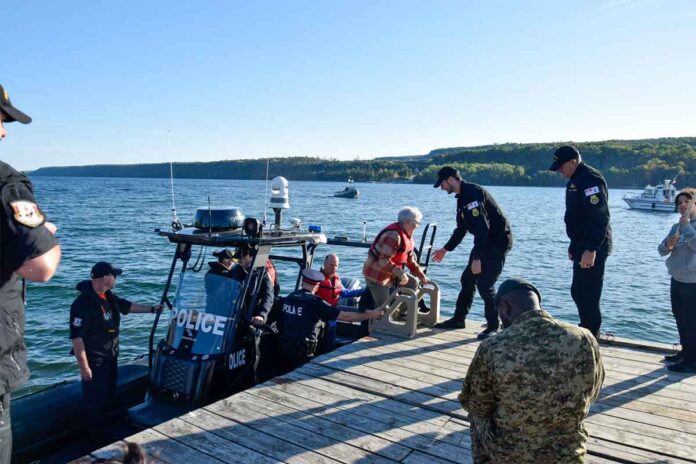
The unveiling ceremony for the gateway sign included representatives from the Island’s police services, including WTPS Chief Ron Gignac, Manitoulin OPP Detachment Commander Inspector Robert Walsh and UCCM Anishnaabe Police Service, along with a number of local First Nations community leaders.
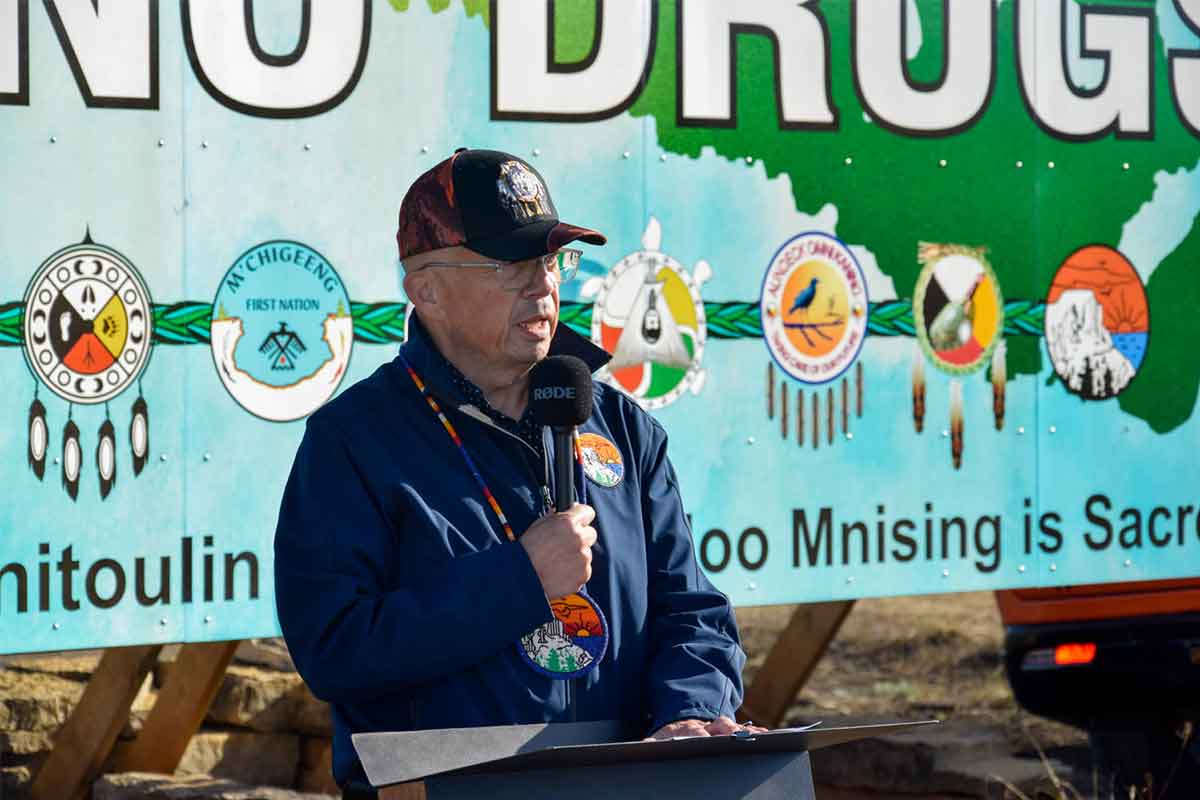
The sign, it was noted during the ceremony, is more than a warning—it’s a response to an urgent reality. Across the Sudbury–Manitoulin region, opioid-related deaths are more than three times higher than the provincial average. The No Drugs campaign represents one of the first large-scale collaborations between the Island’s Indigenous Nations and police services—a unified effort to protect youth, families and communities from the impacts of illegal drugs.
“This is a promise to our youth and families,” said Ogimaa Rodney Nahwegahbow, chief of Whitefish River First Nation. “We are standing together, across every Nation on the Island, to prevent harm, support education and ensure our communities remain safe and healthy.”
“This campaign is a promise to our youth and families,” said Aundeck Omni Kaning Chief Patsy Corbiere. “By standing together as nations, we are showing that drugs have no place on Manitoulin. Our focus is prevention and education, with protection and enforcement when needed.”
“One of my first priorities as Ogimaa was to build and strengthen relationships,” said Wiikwemkoong Unceded Territory Ogimaa Tim Ominika. “Early on, Chief of Police Gignac and I realized we shared the same vision for community safety. This campaign reflects that vision. Our partnerships with UCCMM leadership and police services shows our collective commitment to protecting our members and our neighbours. Coming together is a beginning, staying together is progress, and working together is how we create real change.”
“In a small community like ours, the impacts of drugs are deeply felt,” said Zhiibaahaasing First Nation Chief Irene Kells. “Standing with our neighbouring Nations ensures we protect our families together.”
“Even in our remoteness, we are connected,” said Sheshegwaning First Nation Chief Alana Endanawas. “This billboard shows Sheshegwaning is part of a united effort to keep our youth safe and our Island strong.”
“Collaboration is the most powerful resource we have,” said OPP Inspector Walsh. “This campaign shows what can be achieved when First Nations leadership and police combine education, prevention, and technology.”
“Our message is clear,” said WTPS Police Chief Ron Gignac. “Drugs are not welcome here. Billboards and CCTV are important tools, but our greatest strength is the partnership between leadership and police.”
“The UCCM Police, with the full support of all six UCCMM Chiefs and the strong backing of Anishinabek Nation Grand Council Chief Linda Debassige, are united in one clear message: drugs have no place on Manitoulin” said UCCM Anishnaabe Police Chief Killeen. “Our officers are working closely with Wiikwemkoong Tribal Police Chief Ron Gignac and OPP Inspector Robert Walsh to strengthen our collective response. This campaign shows the power of partnership, UCCM Police alongside our neighbouring police services, First Nations leadership and the entire Island community. Together, we are protecting our youth, safeguarding our families and building a safer, healthier future for everyone on Manitoulin.”
Since 2024, the UCCM Anishnaabe Police’s Drug Enforcement Unit alone has charged 85 individuals with more than 363 offences, and in the process, seizing over $854,000 worth of illegal drugs from the region.
Police Chief Killeen noted that his police service’s success has come despite being severely underfunded compared with non-Indigenous police services. Contract negotiations have dragged on for 30 months without resolution.
The new billboard, installed at Whitefish River First Nation, the gateway to Manitoulin, is the first of several that will appear across the Island. It and its companions will stand as a visible reminder of a broader rural safety strategy that blends prevention, community-based education, and when necessary, enforcement.
A key part of that strategy is a close circuit television (CCTV) network that helps deter crime and support investigations, giving small and remote communities new tools to strengthen safety.
“This billboard is a signal that Indigenous organizations across Manitoulin are working together in new ways, across distances, across nations and with one voice,” said Chief Nawehgahbow. “By placing this message at the gateway to the Island, partners are sending a clear message: drug prevention is everyone’s responsibility, and together, we are stronger.”