
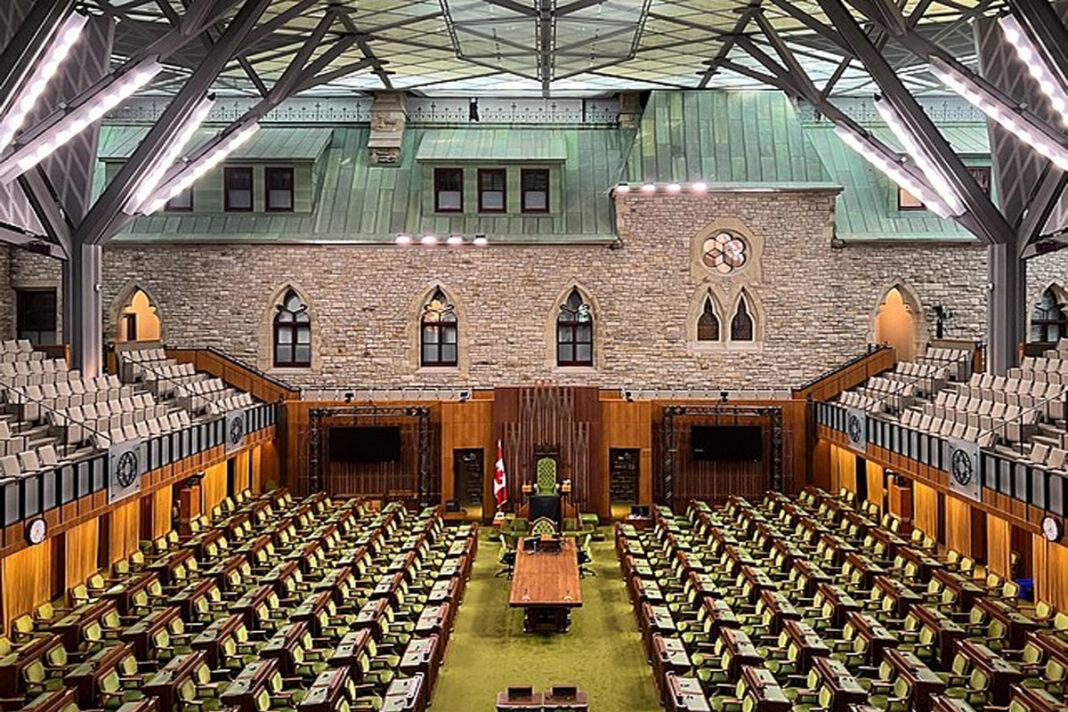
OTTAWA—Canada congratulated itself last month for what it called a “fair and important milestone” in citizenship law. Bill C-3—formerly C-71, the so-called Lost Canadians Act—received Royal Assent on November 21, restoring citizenship to those pushed out by old rules and creating a new, single-generation standard for Canadians born abroad.
But while Parliament celebrates its swift repair of one historical wrong, another remains stuck in legislative limbo. Bill S-2, the long-fought effort to end the second-generation cut-off for First Nations, still lingers in the wings. It won’t reach the House of Commons until spring—after yet another shuffle of amendments, debates and political recalibrations.For First Nations families, déjà vu is the default setting. They have been waiting more than 40 years for this change, watching bill after bill die on the table. Meanwhile, legislation meant to restore citizenship to non-Indigenous families abroad sailed from introduction to passage in under six months.
The contrast is glaring. The implications, painful. However, Dr. Dawn Lavell Harvard told The Expositor that the Assembly of First Nations had met just across the street and came to the Senate to hear the third reading.
“When the third reading was passed, to look up into the gallery and to see all the chiefs there — including our own Grand Chief Linda Debassige — on their feet clapping, I felt a surge of pride,” she said. “You’re supposed to observe decorum but what were four security guards going to do hundreds of chiefs?” she laughed.
A Tale of Two Bills
C-3 landed in June 2025 and moved through Parliament like a stone skipping across a still lake. It restores citizenship by descent to those excluded under the first-generation limit, opens a path for adopted children abroad beyond that limit, and seeks to correct older provisions that stripped citizenship from women and their descendants before 1977.
It also introduces a new “substantial connection” test for future generations born abroad, requiring the Canadian parent to have at least three years of physical presence in Canada before the child’s birth.
Ottawa frames all this as fairness.
But many Indigenous legal scholars and leaders note the timing: after a 13-year vacuum in meaningful effort to fix the two-generation cut-off for First Nations, Canada somehow found the urgency to repair citizenship for those who may have never lived here.
“There’s so much fear-mongering,” said Dr. Dawn Lavell Harvard, reflecting on the Senate’s third reading of S-2 last week. “People keep talking about ‘paper Indians from seven generations back.’ That’s not what this bill does at all.”
Weaponizing Consultation
What has most frustrated First Nations advocates is the federal government’s sudden insistence on “duty to consult” as a barrier to moving forward.
“Minister Gaul-Masty came to the Senate and told us they couldn’t proceed without consulting First Nations,” Dr. Lavell Harvard explained. “But senators pointed out that hundreds of First Nations submitted letters asking for the end of the second-generation cut-off. Only one First Nation opposed it.”
“People have asked if we want First Nations in perpetuity — yes! Yes we do. And anyone who thinks otherwise is advocating for genocide,” she exclaimed.
The inconsistency burns. The federal government pushed Bill C-5—a sweeping fast-track development bill affecting Crown land nationwide—without consulting First Nations at all. Chiefs protested outside the Senate. Questions were raised repeatedly. And the government’s representative had the audacity to say C-5 “did not specifically impact First Nations.”
The entire chamber, observers said, nearly combusted.
The Strange Convenience of Speed
The comparative velocity of C-3 has raised eyebrows across Indigenous communities and legal circles.
This is not about opposing immigration. It’s about noticing patterns.
Canada extended citizenship rights abroad with remarkable speed—while stalling on restoring basic identity rights to Indigenous peoples at home.
“The fact that these two things are happening concurrently is a slap in the face,” Dr. Lavell Harvard said. “S-2 is about our children—children living in our First Nations right now who can’t access land-based learning, language camps, hockey teams, or cultural programs because they don’t have a status number.”
Then came the moment that broke the Senate: a letter from an 11-year-old girl, read by Senator Mary Jane McCallum.
The little girl wrote about sitting on the sidelines as her friends went out on the land for cultural teachings, barred because she lacked a status number. Barred from language immersion. Barred from community programs funded according to the Indian Act’s narrow eligibility rules.
She lives in her First Nation. She is part of the community. And yet, administratively, she is denied her own inheritance.
“This is not about strangers coming to Canada,” Dr. Lavell Harvard said. “This is about our own babies.”
S-2 has never been about paperwork. It has always been about survival.
When governments delay recognition long enough, inaction becomes a tool of erasure. And when citizenship is controlled by colonial legislation, those delays accumulate into something darker: a quiet, bureaucratic withering of Indigenous identity across generations.
“This is about legislative genocide,” Dr. Lavell Harvard stated plainly. “Ending the second-generation cut-off means ending that process.”
The Road Ahead
S-2 is expected to bounce between chambers again this spring. Many First Nations leaders assume the House will send it back for yet more revisions—another repetition in a decades-long cycle of delay.
Meanwhile, Ottawa is already celebrating the success of C-3.
A country eager to restore citizenship for those who lost it abroad still struggles to restore citizenship to the people who first welcomed settlers to these lands.
And somewhere in a northern community, an 11-year-old girl watches her classmates head out onto the land—her land—and waits for a number on a card that should never have been required for her to belong.