
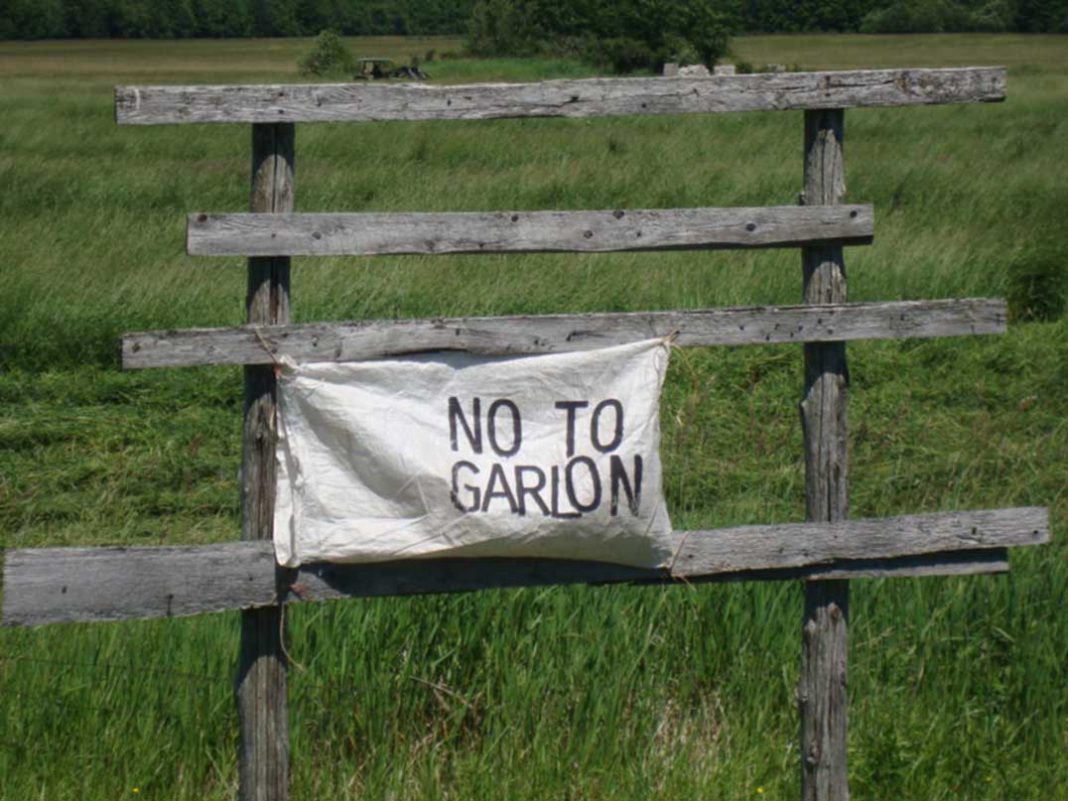
NORTH SHORE—In moonlit silence, Mishomis Ray Owl was stirred by an ancient call: “Wake up.” At his kitchen table, he heard his ancestors and guides speak in Anishinaabemowin—an ancestral summons that birthed his role as forest sentinel in the vanguard against aerial spraying of glyphosate for plantation forestry, being executed in the Anishinabek Nation Great Lakes territories.
Across the land, TEK Elders stand for the law of the land—embodying Mino-Bimaadzowin (the Anishinabek law of ‘living the good life’). Their duty is not relegated to ceremony; it is spiritual, legal, communal. They are unwavering in their message: aerial glyphosate spraying violates Treaty rights—the sacred obligations enshrined under section 35(1) of the Constitution Act, 1982 and grounded in Anishinaabek law and oral tradition, ways of being with the land that predate European contact.
Grandmother Caroline Recollet, who has taken on Mishomis Owl’s mantle, has said: “Ontario has an obligation to respect our Treaty rights… When forests are converted to plantations, all life is affected—we share these lands with all of Creation.”
On Earth Day 2024, TEK Elders stood at Queen’s Park, draped in the authority passed down by their ancestors—those responsible for the signing of original treaties—were joined by environmentalists to demand in a united voice: “Stop the Spray.”
Elder Evelyn Roy, Anishnaabemowin language keeper of M’Chigeeng First Nation, did not mince words: “They are killing the animals; they are killing everything. Us too, and our medicines! Even some of our trees are dying. Trees are medicine too.”
Their voices have carried forward through a wave of billboards, the first of which was unveiled in Sagamok First Nation in 2024—skeletal moose silhouettes proclaiming: “Glyphosate Kills All.”
Grandmother Caroline Recollet, speaking with the authority passed to her by trailblazer Mishomis Ray Owl, declared: “Our connection with the land—what happens to Mother Earth happens to our bodies, and we are all very sick,” as previously reported by The Expositor.
The march of these truths lands in every crushed berry and silent birdcall. As Grandmother Recollet warned, the transformation of biodiverse forests into jack-pine monocultures — wiped clean with herbicide—is a death sentence. “Native plants, important fungi, and bacteria are forever harmed … leaving a grey wasteland.”
The TEK Elders articulate a profound ecological grief: the destruction of biodiversity, the rising of monocultures and the silent forests where moose and birds once thrived are not byproducts—they are violations of spiritual and legal-political agreements.
Scientific Uncertainties Surrounding Chemical Use
Critics argue that glyphosate isn’t just a chemical—it’s a slow dissenter of entire ecosystems. More than 61 independent biophysical studies have outlined its persistence claiming that the chemical leeches into soil and water and has a life cycle lasting months to years, disrupting microbial communities essential for plant, animal and human health.
According to these studies, indirect effects—microbiome imbalances in soil, vegetation, wildlife, and even humans—are subtle but systemic, eroding life’s scaffolding according to independent research not paid for, or heeded, it seems by both Health Canada and the PMRA.
While independent Canadian studies have raised troubling questions about the potential of a shadow side to the chemical —it’s possible ties to cancer and to the quiet unravelling of reproductive health—proponents, including Canadian regulatory bodies such as Health Canada and the PMRA, and their North American counterparts, maintain that when applied according to label directions, glyphosate poses no carcinogenic threat.
Traditional Indigenous ecological knowledge, rooted in generations of direct observation and connection to the land since time immemorial, according to Anishinaabek teachings, provides its own compelling evidence—warning that the forests, waters, medicines, and animals already show signs of harm. Grounded in Mino Bimaadzowin, the Anishinaabe law of living in balance with all beings, this knowledge holds to account that decisions must honour the sacred responsibility to protect the web of life.
Dr. Lisa Wood’s five-year NSERC-supported research project gathering and examining data on how glyphosate residues affect forest-food web health, gut bacteria and ecosystem stability—revealing the unseen yet irreversible consequences of the substance being poured from the sky.
Between these systems—the caution of traditional ecological life ways, lived science, Western science and the certainty of official policy—lies the contested ground where the debate continues to grow.
Two Laws, One Truth?
This resistance is anchored in two laws—ancestral and constitutional.
The TEK Elders are adamant: “The duty to consult… cannot be satisfied by public consultation which essentially consists of giving notice. Aerial spraying violates our Treaty rights… it is unnecessary,” according to a public statement on their website, tekelders.ca.
The traditional grassroots governance group, which was launched over a decade ago, in 2014 —aims to prove exactly that. Ray Owl pressed the federal government, highlighting that no First Nations were consulted before spraying began in 1994—even in areas like Massey, where treated lands feed directly into essential watersheds, including the North Channel of Lake Huron.
A lawyer for the firm Ecojustice—which takes on pro bono cases, some even reaching the Supreme Court as Charter Rights challenges—Laura Bowman has framed the stakes plainly: “Glyphosate is the most widely used pesticide in Canada, with residues detected in 70 percent of Canadians tested … Health Canada now has until August 2025 to re-evaluate using up-to-date, independent science,” according to a court order, and the clock is ticking.
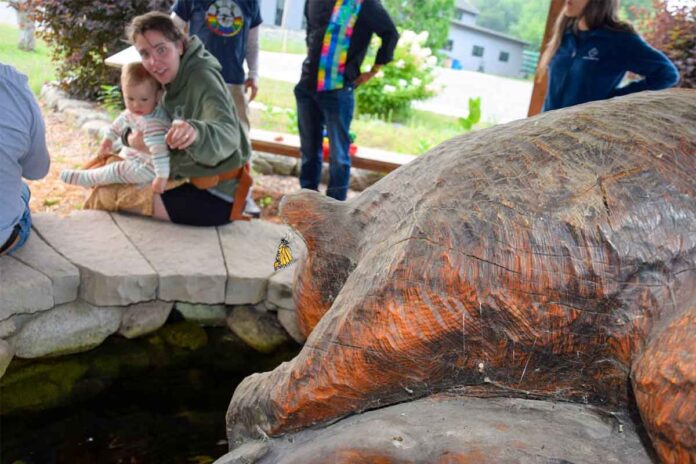
On Manitoulin Island, voices rise. At NEMI council, Dr. Janice Mitchell, veterinarian and beekeeper, lamented the loss of her 16 colonies, all of which have according to studies on the cadavers, succumbed to levels of glyphosate twice the amount safe for human exposure.
Dr. Mitchell had done what no ministry, forestry company, or regulator had ever bothered to imagine. Inspired by the relentless warnings of the TEK Elders, she gathered the stilled bodies of the bees she had lovingly stewarded before their demise.
As they lay in her palms like fallen prayers, each a tiny sentinel silenced mid-flight, she decided to send them to be studied at the University of Guelph.
Dr. Mitchell asked the question no one had asked before: could these cadavers hold the chemical signature of glyphosate? The scientists paused, surprised. In all their years, no one had ever made such a request.
And so, Dr. Mitchell’s bees have become unwitting witnesses, their small, silent testimony joining the growing chorus against the poison drifting down on Anishinaabe lands.
“Thalidomide was on the market for just four years … DDT was used for three decades before it was banned … Glyphosate’s next review isn’t until 2032 — that’s a 15-year window where harm can accumulate,” she has emphasized to the MMA, Tehkummah and NEMI town councils in the last year.
Letters to the editor at The Manitoulin Expositor have amplified the disquiet around the controversial chemical, begging the question: What are the risks to our collective future should we continue upon this path or abandon it?
The August 14 Rally
Against this backdrop, TEK Elders remain the central heartbeat of regional resistance. Their oral traditions, spiritual mandates, and embodied science challenge both the short-sighted economics of spraying and the slow violence of regulatory inertia.
On Thursday, August 14, from 10 am to 12 noon, the TEK Elders will stand on Highway 17 at the Serpent River Trading Post, alongside Stop the Spray Ontario, supporters from Moonbeam Ontario whose mayor Luc Leonard has put forward a motion to end the use of glyphosate in their municipality, Anishinaabe community members and other stewards of the land.
They are emphatic that is not a protest but a reminder to all levels of government and the courts of their duty: to protect Treaty lands, uphold Anishinaabek laws and heed the science.
This convergence of ancestral law and modern science, of mushrooms, moose, medicines and microbes—declaring together: “You are killing our people and our forests, and our friends and our medicines. We cannot continue to survive… unless we stop this.”