

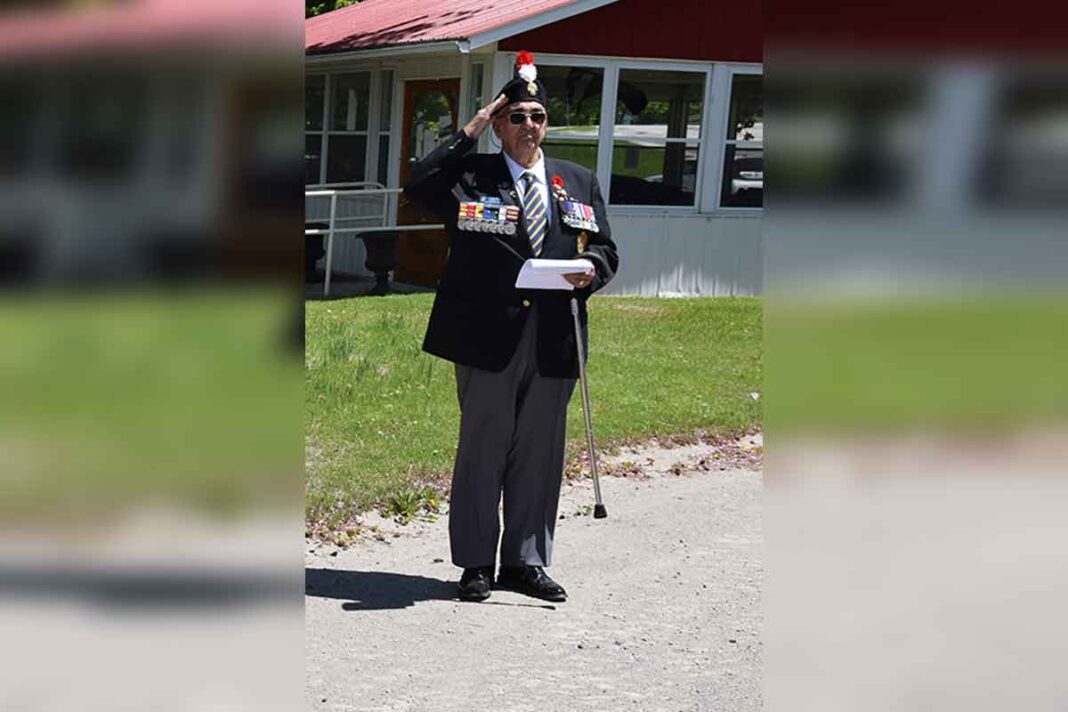
MANITOULIN—The rituals of Remembrance Day remind us each year of the sacrifices made in defence of our nation by so many young men and women far from our shores. With lapels bearing the iconic red poppy, the playing of ‘The Last Post,’ the reading of ‘In Flanders Fields’ the poem by Canadian First World War army physician John McCrae and the solemn laying of wreaths beneath cenotaphs bearing the names of our country’s fallen, the reverence with which communities’ pledges “we will remember them” and “lest we forget” is front and centre in our lives—for just one day.
The Royal Canadian Legion not only plays a front and central role in organizing Remembrance Day ceremonies, undertakes the logistics of distributing poppy boxes and, moreover, stands sentinel to the needs of Canada’s veterans each and every day.
But there are also a number of individuals whose passion for Remembrance rises to heights that extend beyond that of most of those wearing a poppy on their lapels. We spoke to two of those individuals this year to learn more about what drives their passion.
Colin Pick is one such individual. While he now makes his home just North of Sudbury in the Valley, Mr. Pick was for many years a familiar sight at cenotaphs and meetings here on Manitoulin Island. He has also been a major pillar of support for those suffering from the trauma of post-traumatic stress disorder for both service and law enforcement personnel.
“My grandfather was in World War One and of the six sons in our family, five were in different aspects of the military,” he said. “In my life, the military played a central role.” For Mr. Pick, Remembrance is highly personal.
But the roots of his passion lie even earlier than the “war to end all wars.”
Mr. Pick cites the Boar War, largely forgotten by Canadians having been overshadowed by the horrific butcher’s bills of the two world wars, as evidence of what can happen as memories are dulled by the passage of time. “When I first came to Canada, I came to realize that people don’t know that the South African War was the first time that Canadians fought overseas,” he said.
Some 7,300 Canadians volunteered to serve alongside the British Army between 1899 and 1902, including 12 nursing sisters, and resulted in 89 Canadian soldiers being killed in action and 135 who died from other causes—primarily diseases. Canadians served in various units, including infantry, mounted rifles and artillery and participated in major battles, such as the Battle of Paardeberg, a significant victory for the British forces and one in which the nascent Canadian military prowess was first lauded.
“I think we do a good job here in Canada with Remembrance Day every year, wearing the poppies and such,” Mr. Pick said, “but for the families left behind (by those who have fallen), they remember each and every day.”
“I will have a passion for Remembrance until the very day I die,” he said.
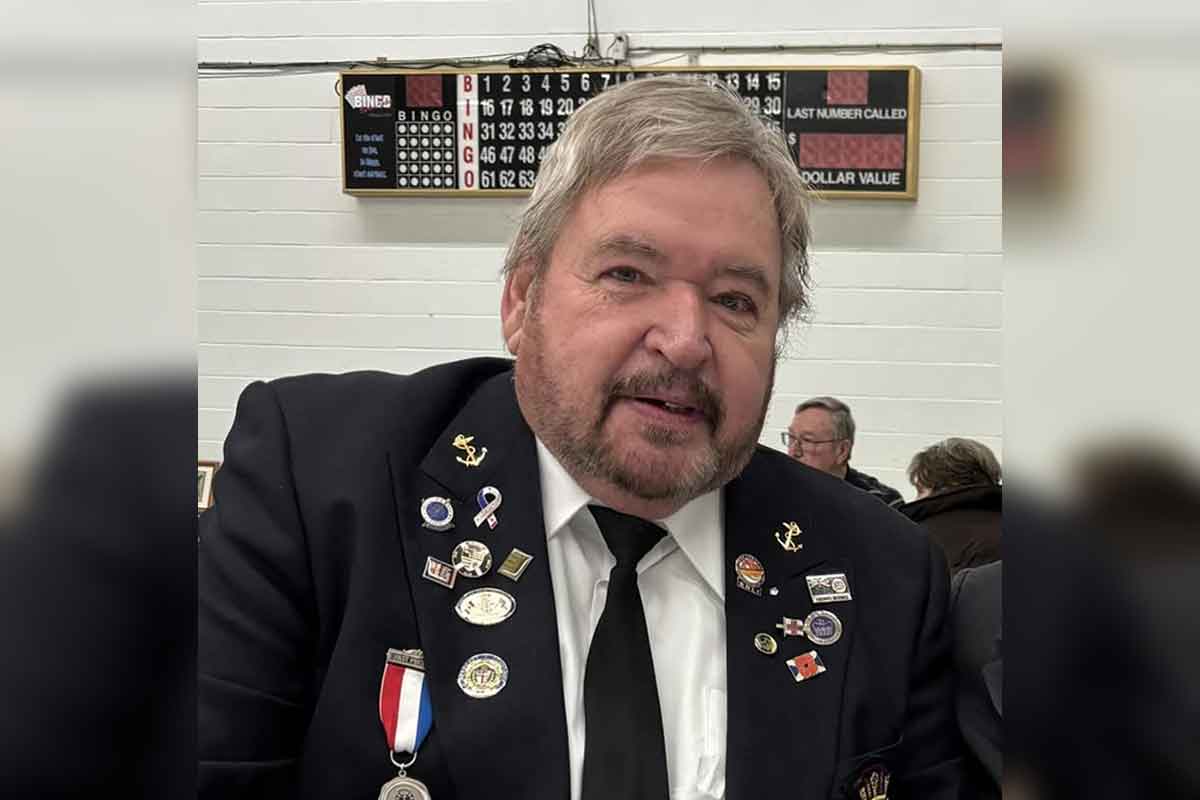
Bernard Andrews is a man with strong opinions and with few, if any, compunctions about sharing them. His outspokenness has won him few friends among the rank and file of veteran organizations down through the years and has sometimes placed him at full on loggerheads with those around him. But he is also often a solitary figure standing, wreath in hand, beneath cenotaphs and memorials on the anniversaries of seminal battles that are slowly falling from our collective memories.
Certainly, battles such World War One’s Vimy Ridge and the storming of JUNO Beach during World War Two’s Normandy invasion still resonate in our collective consciousness, but it seems to do so with lessoning attention with each passing year.
“There are times when I am the only one standing in the rain, the only one laying a wreath,” he said, shaking his head sadly.
Mr. Andrews recalled his first memory of stories of Canadian Forces personnel during the Second World War.
“There were a group of young men, many of them not even 20 years old, who were helping my grandparents put a new roof on their home,” he said, a Scottish brogue still evident in his words. “That was just before Dieppe.”
His grandparents spoke of how their young Canadian friends were suddenly called away.
“They never returned,” he said. It was wartime, and unlike the 24/7 coverage of modern conflicts, news did not travel fast, if at all. “My grandparents only learned what happened to those young men when the ‘red hats’ showed up to collect their belongings.”
After a soldier’s death, military organizations carefully collected and processed personal effects to send home to their next of kin, following established procedures. This was done to prevent items from being stolen and to ensure valuables like cash were properly accounted for. For many families billeting soldiers from abroad in Britain, the arrival of the collection team was the first indication of their boarders’ fates.
Mr. Andrews’ passion for Remembrance extends beyond the ranks of the uniformed military services, he has created a rope wreath commemorating the loss of the Edmund Fitzgerald which he lays at the foot of the maritime memorial on November 10, the anniversary the sinking of that ship in Lake Superior in 1975 with the loss of 29 men.
The former British Royal Lifeboat Service member feels a particular connection with maritime losses.
Mr. Andrews said he laments the slow loss of commemoration ceremonies for such, although he lauds the laying of the wreath in the waters of the North Channel by the Manitoulin Sea Cadets each year to mark the Battle of the Atlantic.
“We have such a beautiful community cenotaph (at Memorial Gardens in Spring Bay) but it is hardly used anymore, other than Decoration Day,” he said.
Like Mr. Pick, Mr. Andrews said he believes there should be more attention paid to the anniversary of major events and conflicts in which our nation’s warriors have participated.
“I will continue to lay wreaths until the day I die,” he said.
As the number of those whose families that have been personally impacted by wars dwindle (both Mr. Andrews and Mr. Pick are well into their senior years), the pain inflicted by our nation’s losses may fade from collective consciousness, but for these two aged warriors the passion for Remembrance will never abate.
Lest we forget.