
MANITOULIN—“We’ve passed too many boundaries,” David Suzuki said last week—not with thunder, but with the hush before a storm. After decades urging Canada to listen—to science, the land, ancestors—he no longer hedges. “It’s too late,” he told iPolitics. “We’re not going to do it.”
The Earth has already warmed past 1.5°C—12 months running. Ice thins, fires rage, emissions climb.
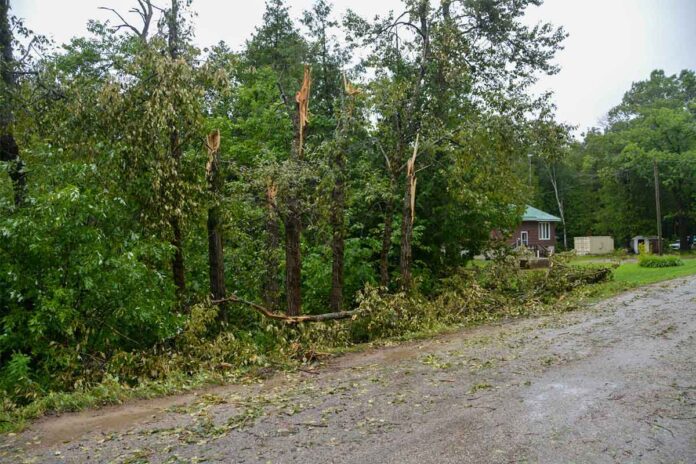
Last week, torrential rain south of Wawa tore through Highway 17 between Batchawana Bay and Montreal River. For Manitoulin Island—with its fragile single access point on Highway 6—such an event threatens to sever our only lifeline. Deliveries, medical transport, school buses, fuel trucks: all at the mercy of failing roads and relentless storms.
Authorities keep promising a swing bridge—twice, thrice—a spectral solution announced in press releases but never built. Each flood leaves Islanders exposed.
In that washout, a parable: nature’s patience exhausted, systems once assumed immutable dissolving under pressure.
Here, we’ve long known systems fail. When roads close and ambulances stall. When food costs rise and water runs murky. When neighbours become lifelines, chopping wood or opening their doors.
Mr. Suzuki, once a believer in policy’s power, now echoes what many here have felt: politics won’t save us. Not in time. Maybe not at all.
Mr. Suzuki urges environmentalists to focus local—build resilience, not petitions. Root cellars, seed libraries, community hubs doubling as warming shelters. Lytton, B.C.—flattened by fire—is rebuilding this way.
A framework to define Earth’s safe operating space
Swedish earth systems scientist Johan Rockström, director at Potsdam Institute, first mapped nine planetary boundaries in 2009—critical Earth system processes like climate, biodiversity, freshwater use—that humanity must respect to avoid collapse.
By September 2023, seven of nine had been crossed, including: climate change (over 1.5°C warming), biosphere integrity (mass extinctions), biogeochemical flows (nitrogen/phosphorus overload), land-system change (deforestation, sprawl), freshwater depletion, novel chemical pollutants and atmospheric aerosol loading.
Only ocean acidification and stratospheric ozone remain just inside safe limits, though both strain under pressure.
Mr. Rockström warns crossing multiple boundaries triggers cascading, unpredictable risks. We now inhabit what he calls the “danger zone.” Mr. Suzuki points to this as the science behind his grim warning: “we’re going to overshoot.”
What the Lakes are telling us now
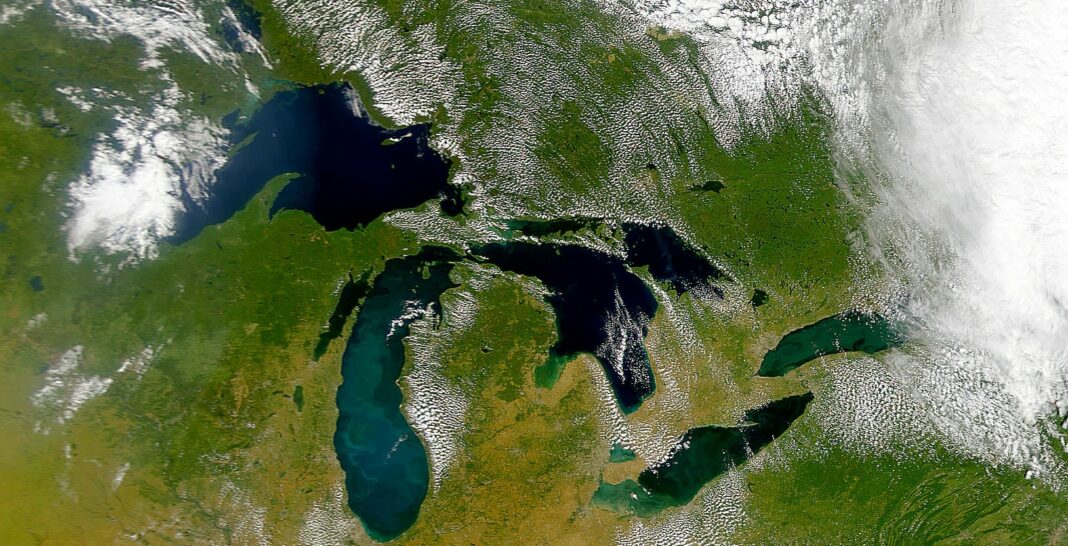
It starts with degrees—a subtle tilt like an old cedar leaning or shore ice retreating earlier each spring. The climate shifts, the Great Lakes bear witness.
The latest regional assessment from the Environmental Law and Policy Center (July 2025), supported by GLISA, shows the Great Lakes basin warming nearly 3° Fahrenheit since 1951. Seasons reshuffle. Cold nights drop by five days yearly compared to the early 20th century. Extreme precipitation events surge nearly 40 percent above historic norms.
Here on Manitoulin, where snowplows and sap runs still mark life’s pulse, this is profound. Too much rain shears the land—flooding fields, drying soils to crust, clogging culverts. Once rare storms now strike twice a season.
Lake Huron’s moods shift too. Lake Superior, our northern neighbour, has warmed nearly 5° Fahrenheit since 1979—faster than any other Great Lake. All five lakes hit record surface temperatures in 2024. Underwater currents that fed spawning fish twist strangely now. Whitefish, perch, fishers—none fooled.
Ice is no longer guaranteed. The Great Lakes hit their lowest winter ice cover on record in 2024—just over four percent average. On Manitoulin, ferry schedules stretch longer into shoulder seasons, ice roads go unbuilt, winter travel turns risky. The loss of ice disrupts hunting, harvesting, connection—disorients a people who read the land by seasons.
Snow thins too. Projections suggest a 60 percent drop in snowfall by century’s end across Ontario and the Upper Midwest, if emissions keep rising.
Then there’s evaporation—water stolen from lakes and wetlands as warmer air sucks moisture skyward. We see it in shrinking wetlands, thirsty gardens, low water tables.
Perhaps most alarming is the speed and scale of change. Under high emissions, the region may see 60 extra days over 90°F by century’s end. Even modest scenarios promise longer summers, shorter winters, fewer biting cold days. That means heat stress for the vulnerable, new pests, rising energy bills for cooling.
Here on Mnidoo Mnising—where land and water cradle community—the stakes are intimate.
Shifting patterns in water and life
Across the basin, once stable rhythms—river rises, wetland retreats, ice durations—now falter. Aquatic and wetland plants suffer as flow timing and water levels shift. Manoomin, wild rice, holds cultural and ecological roots here; floods too frequent or too fierce, along with thinning ice, threaten its survival and those who harvest it ceremonially.
Warming and longer growing seasons push agriculture north. Corn and soybeans spread with intensified practices—more fertilizer, fewer buffers. Western Lake Erie’s nutrient overload and hypoxia warn us what unchecked expansion might bring elsewhere.
These same shifts increase fertilizer runoff. Spring rains flush nutrients into lakes, warming water feeds harmful algal blooms. Water quality fails; aquatic habitats degrade; human health risks rise. Inland lakes, vital for drinking and recreation, are vulnerable.
New players complicate the water story: data centres. As of May 2025, 855 operate around the Great Lakes, consuming millions of gallons daily for cooling. Many sit by rivers and lakes; some draw groundwater and return warmed water, altering local flow and temperature in ways yet to be fully understood.
Illinois and Ohio rank fourth and fifth in national data centre presence. Water abundance draws developers, but fresh water is finite—its health demands vigilant stewardship as pressures mount.
On Manitoulin, these changes ripple through dwindling turtle and fish populations, the looming threat of algae blooms in our bays, and the subtle fading of familiar frog calls.
Species and ecosystems on the move
Climate change reshapes life itself. Species ranges creep northward. Storms grow more frequent, intense, longer—impacting land and water habitats. Tick populations expand. Summer stream temperatures rise, stressing fish.
Many impacts result from intertwined forces: climate, land use change, habitat loss, invasive species.
Cold-blooded animals respond strongest, moving north or to higher ground.
Cisco and lake whitefish have disappeared from many Wisconsin inland lakes, victims of shrinking coldwater habitat—a fate looming over Manitoulin’s own waters. In Lake Michigan, lake whitefish risk local extinction within five years, despite fishing bans. Reduced winter ice leaves eggs vulnerable, while invasive mussels strangle food sources for young fish—a threat that casts a shadow not far from our shores. Brook and brown trout habitat may shrink 30-70 percent by mid-century, though northern streams with cold groundwater might offer refuge.
Sea lamprey may find longer growing seasons and new habitats, complicating control efforts.
Harmful algal blooms and hypoxic zones spread, fed by warmer water and nutrient runoff, impacting fish, birds, and amphibians. Amphibians suffer from toxicity, habitat loss, disrupted food sources, and reproductive failures—though mortality often goes unseen.
Storms stir lakes, changing light, nutrients, temperature, and the aquatic food chain—sometimes briefly, sometimes long-term.
Stewardship and strength
Here, local groups hold the threads of hope. Wiikwemikoong Species at Risk, Friends of Manitoulin Turtles, Manitoulin Nature Club and Manitoulin Streams are deeply engaged in protecting waterways, habitats, and species. They monitor water quality, restore habitats, educate communities and champion Indigenous stewardship.
These organizations anchor community engagement in cultural knowledge and scientific vigilance, weaving together past, present and future.