
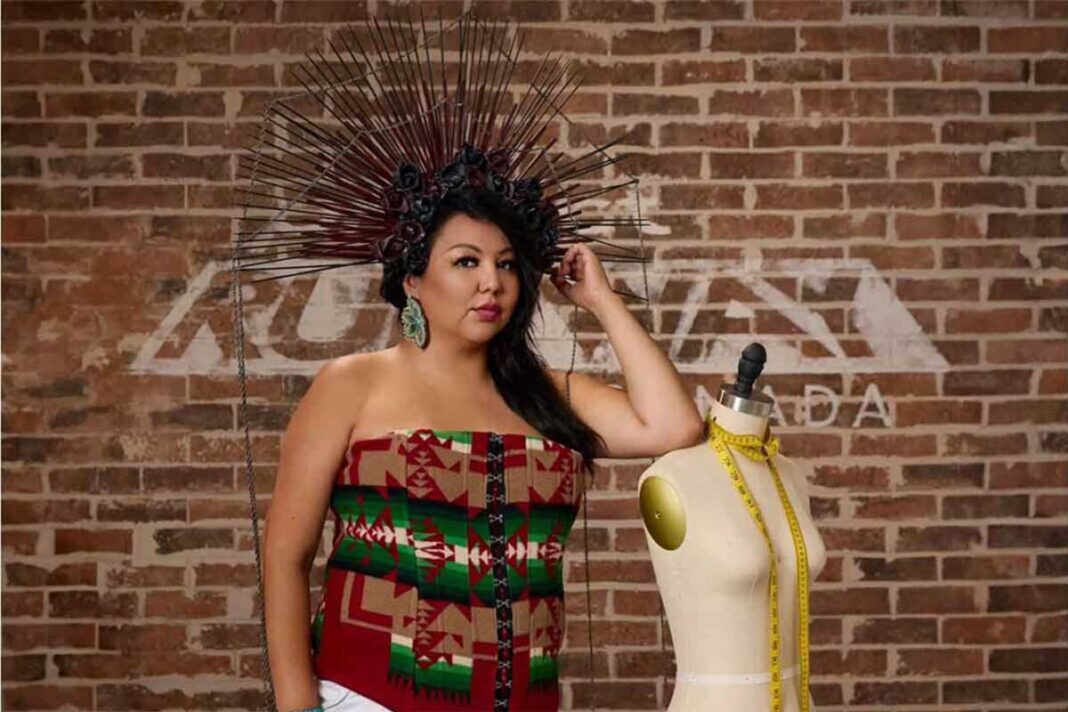
CANADA—Some stories begin in Paris, or Milan, or on the kind of Manhattan sidewalk where the steam lifts like a blessing. But Little Feather swears hers began in Sudbury —the Nickel City, the sleeper city, the surprising birthplace of an artist who would leapfrog the whole Canadian fashion circuit before Toronto even realized she’d packed her bags.
“I feel like my whole year started in Sudbury,” she says, half laughing, half stunned in the remembering. She’d been invited to the (name of the First Nations fashion show late 2024) program—“I don’t even know how to say it properly,” she shrugs—for an Indigenous fashion show. A small stage, a quiet room, the kind of event where you expect polite applause and maybe a few new Instagram followers.
Instead, her phone lit up: New York is calling.
“What the hell? New York,” she said, shocked that a call was coming in. “I thought it was a spam call.”
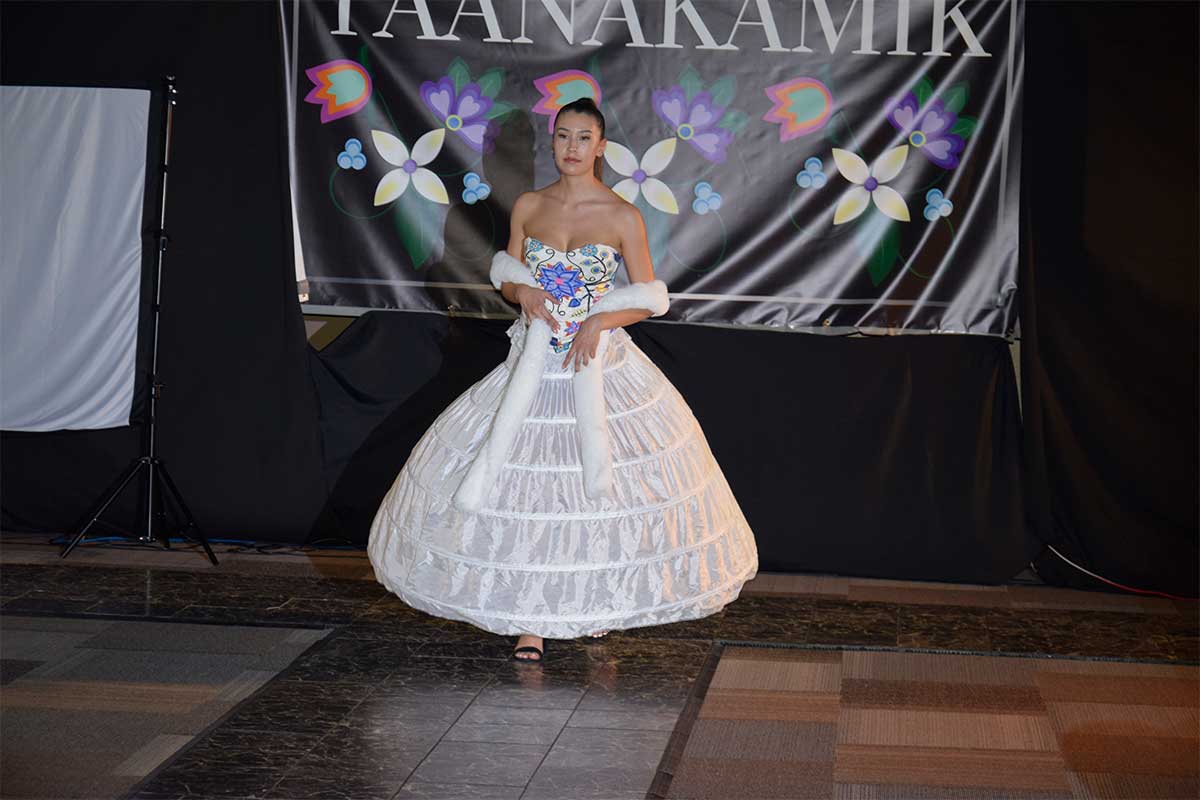
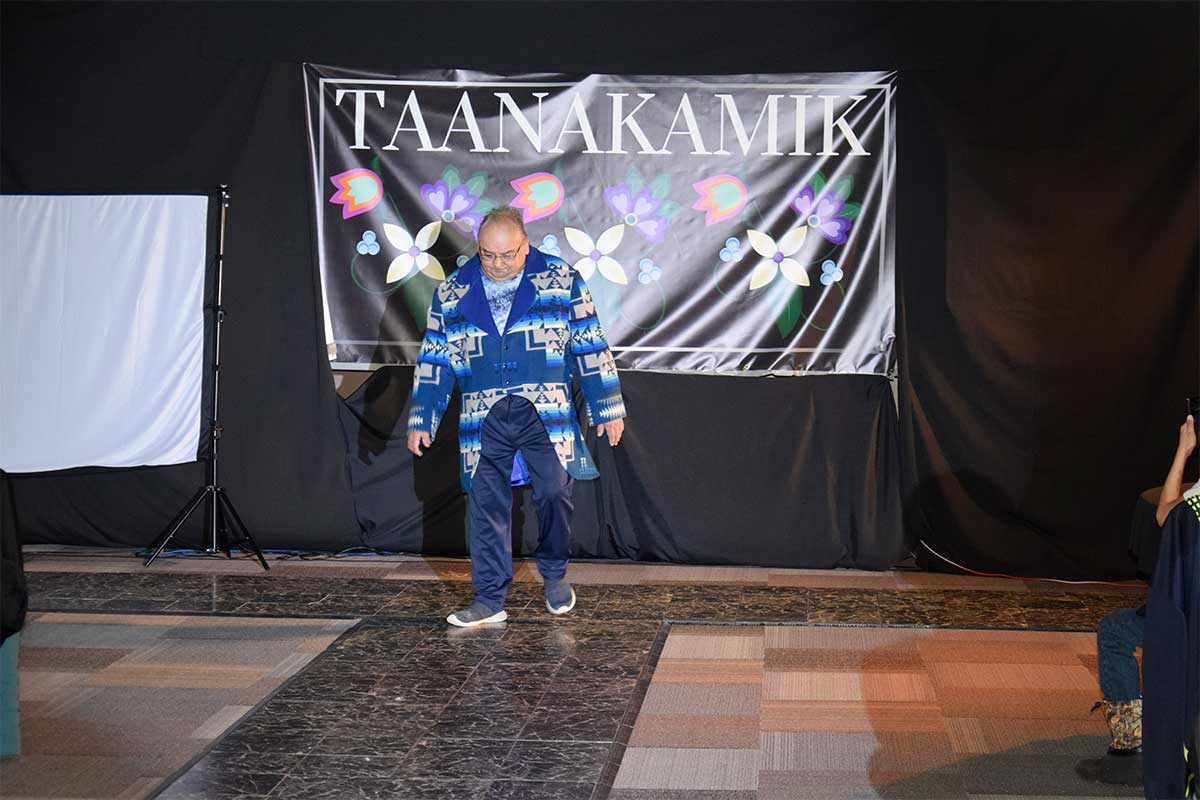
photo by Michael Erskine
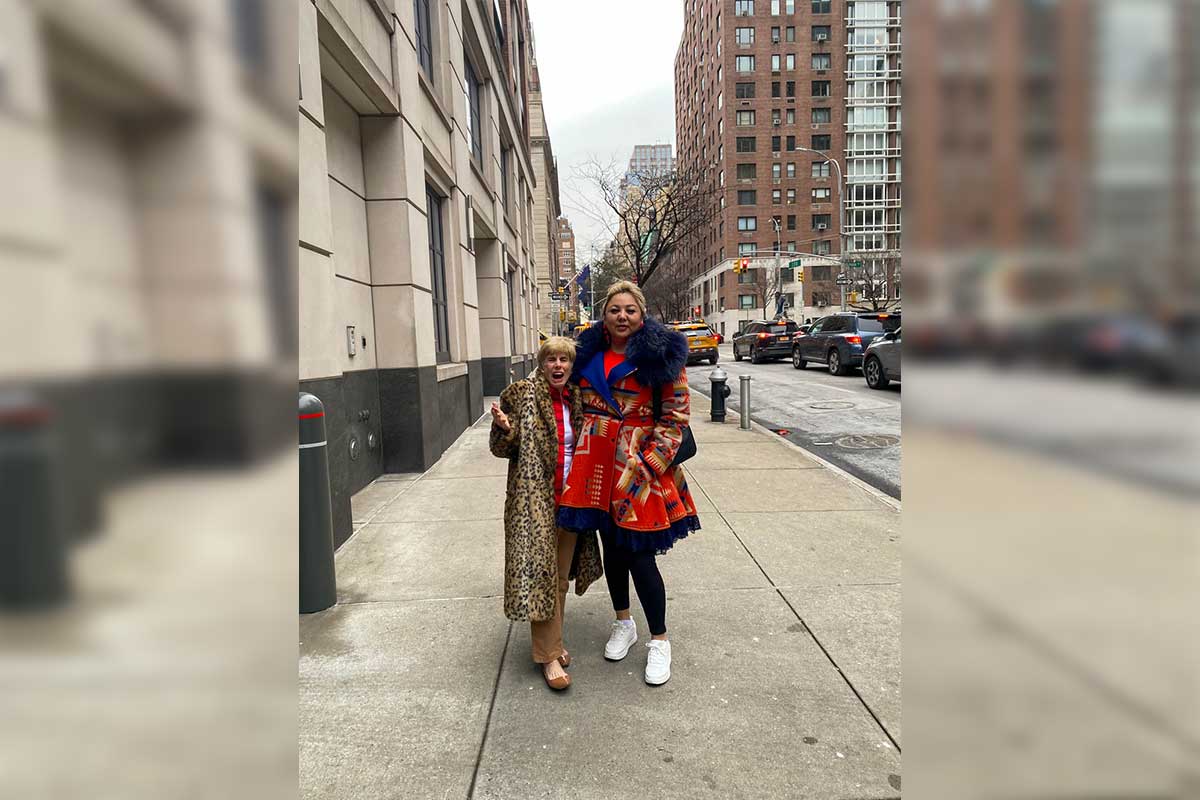
It was Runway 7. They wanted her in November. She walked their show in January. Her first international showcase, before she’d ever walked a major Canadian runway. Not even Vancouver Fashion Week had snagged her; she’d missed the deadline anyway — she’d been busy filming.
“So I just went straight through to New York,” she says. And once New York was done with her, Los Angeles came knocking. Someone in the audience had seen her coats — her 2025 winter collection, designed on a pool table in Huntsville — and decided they wanted her on a bigger stage.
That’s how it’s gone for her lately: sudden invitations, jetstreams pulling her across borders, and Canada blinking awake only after the world has already fallen in love.
A lineage in cloth—a child watching her mother cut the sacred
Ask Little Feather where it all began and she returns to a house small enough to hold dreams tightly, where her mother once brought home an enormous industrial sewing machine to make a Pendleton jacket.
“I remember how terrified she was cutting it,” Little Feather says. “It’s an expensive blanket.” A child watching a mother breathe deeply before the scissors touch the fabric — that’s the kind of memory that burrows into your creative marrow.
She talks about gas-station sweaters with their round, formless puff — “like you’re just a ball,” she jokes — and how she always longed for garments with structure, intention, and the grace of an era long gone. Edwardian silhouettes, waistlines that insisted women were made of shape and story, jackets that flared like skirts — garments that whispered instead of shouted.
That vision carried her to Banff, where couture instructor Darcy Moses helped sharpen her blade, guiding her from “costumes to garments,” as she puts it. That’s where Little Feather Designs evolved into Little Feather Couture.
Where play became craft. Where instinct became lineage.
Looking outward to bring something home
She’s often told she doesn’t design in the familiar First Nations aesthetic — and that’s intentional.
“I look outside our designs first,” she says. Not to escape them, but to bring something fresh back home. And she’s deliberate about making garments that everyone can wear without fear of crossing cultural boundaries they don’t understand.
“It’s a teaching moment,” she explains. Pendleton blankets have always marked respect — weddings, honourings, moments too big for ordinary cloth. If a person wears a Pendleton coat she’s made, she wants them to know the meaning, to feel the weight of it, not in guilt but in gratitude.
Still, reverence shouldn’t keep anyone from wearing something beautiful. She’s now shifting toward more accessible pieces — red-and-black checkered fabrics, shorter jackets, designs that could wander from Muskoka hunt camps to downtown streets without blinking.
An heirloom can be expensive, she says, but beauty shouldn’t be gatekept. A ready-to-wear line is coming.
Fog, pressure, and the strange thin air of success
When asked what it feels like to meet celebrities — Coco Rocha among them — she only shakes her head, her voice lowering.
“It was almost dream-like,” she says. “I felt like I was in a fog.” But the real pressure, the kind that tightens around your ribs, wasn’t the cameras or the couture deadlines.
“I feel the pressure of my people,” she admits. “To represent us well. To show the world that Indigenous people are beautiful — not the stereotypes people think we are. We’re creative. We’re humble.”
That humility, she suspects, is what the casting directors saw in her.
But the best review didn’t come from the fashion world at all. It came from her daughter in Vancouver, who struggled with a Crave login before finally watching the first episode.
“She said she cried almost the whole time,” Little Feather says. “She told me she was proud of me. After everything she’s seen me go through — all the barriers, all the single-mom years — that meant everything.”
Still rooted at home
Despite the international whirlwind, Little Feather hasn’t drifted from her community. When a young First Nations actress from Wiikwemkoong landed the lead in a production of Annie, her mother reached out for a custom opening-night gown.
Another mother — a Mohawk woman from New York — has been calling too. Her teenage daughter, already modelling for Chanel, wants to walk for Little Feather. International recognition is one thing; being sought out by Indigenous families looking for someone they trust? That’s legacy.
“I feel like I am attracting all these deadly ninja moms,” Little Feather says laughing, her face shining with pride.
Her website and online shop will launch soon — t-shirts, wearable merch, and eventually a full ready-to-wear collection to bridge the space between runway spectacle and everyday life.
For now, Little Feather is somewhere between worlds: Sudbury and New York, Huntsville pool tables and LA spotlights, heirlooms and hoodies, fog and clarity.
But she walks each stage — local or global — with the same intention:
to honour the people who raised her, the daughter who believes in her, and the stories stitched into every line of cloth her hands touch.