
MANITOULIN—For over two decades, my observations regarding residential water quality have revealed a consistent pattern of common misconceptions. Residential and cottage owners often hold strong, yet sometimes unfounded, beliefs about the safety and purity of their water, whether it originates from lakes, drilled wells, shore wells, cisterns or rivers. These perceptions, often passed down through generations or based on anecdotal evidence, can lead to a false sense of security regarding drinking water safety.
The Myth of Inherently Safe Water
A widespread belief is that water from a private source is inherently safe, particularly if it’s been deemed acceptable in the past or if the surrounding environment appears undisturbed. For example, some assume their well water is pristine simply because previous generations never experienced issues, or that lake water remains safe due to a lack of recent development.
Another frequent assertion, particularly concerning shore wells, is that they are “lake water fed directly from the lake,” implying natural filtration. Similarly, new homeowners with drilled wells often believe that an initial “good” test result, coupled with the well’s depth, guarantees it’s free of bacterial contamination. These diverse perceptions share a common thread: the conviction that the water is safe without further assessment or treatment. This often reflects a desire for the water to be safe, rather than a conclusion based on comprehensive understanding.
Septic Systems and Groundwater Contamination
One of the most prevalent misconceptions revolves around septic systems and their potential impact on well water. Many owners believe that a significant distance between their septic system (typically at the back of the house) and their well (often in the front) automatically prevents contamination. This perception is common in rural subdivisions lacking municipal water and sewer services, where each home relies on its own well and septic system.
However, the reality is that all septic effluent is discharged into the ground through weeping tile. The subsequent movement of this effluent is highly dependent on local geological factors, including soil layers, rock formations, and the depth and flow of the groundwater table. Contaminants from a septic system can travel considerable distances underground, potentially impacting nearby wells, regardless of their perceived separation. Understanding groundwater flow patterns is crucial for assessing this risk.
The Limitations of Public Health Unit Testing
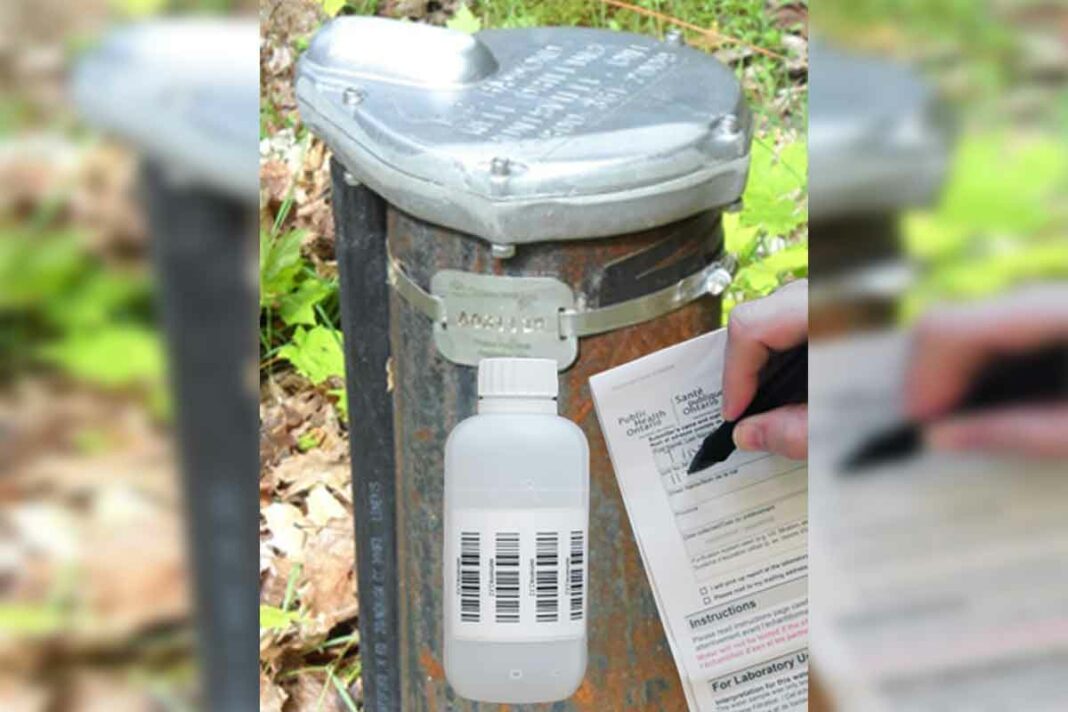
Many homeowners rely solely on a single water test conducted by the local Public Health Unit, often at the time of purchase or sale of a property. The perception is that this test provides a comprehensive assessment of overall water quality and that the Health Unit would flag any significant issues.
It’s important to clarify that Public Health Unit tests typically focus on microbiological contaminants, specifically total coliform and E. coli. While these are vital indicators of potential fecal contamination, they do not screen for a wide array of other possible contaminants, such as:
● Heavy Metals: Arsenic, lead, mercury, etc.
● Chemicals: Pesticides, herbicides, industrial solvents, etc.
● Pharmaceuticals and Personal Care Products (PPCPs): Traces of medications, cleaning products, etc.
● Naturally Occurring Substances: Radon, uranium, fluoride (at elevated levels).
Therefore, a “passed” Health Unit test, while reassuring for bacterial safety, does not guarantee the absence of other harmful substances. Regular, comprehensive testing for a broader spectrum of contaminants is recommended for private well owners.
The Truth About Drilled Wells and Bacteria
A common belief is that deep water sources, particularly drilled wells extending 100 feet or more into the ground, cannot harbour bacteria because they are too deep for microbial survival. This perception often leads well owners to forgo regular testing.
However, geological formations, especially in areas with heavy rock, can contain a network of deep fissures and fractures. These natural pathways can allow surface water, and the bacteria it carries, to infiltrate deep into the ground and reach the water table. Observations have shown the presence of bacteria in wells as deep as 200 feet, highlighting that depth alone does not guarantee bacterial purity.
A Holistic Approach to Water Safety
Ultimately, a comprehensive understanding of water quality requires moving beyond superficial perceptions and embracing a complete picture of overall safety. Water quality should not be viewed as a “snapshot” in time for one or two contaminants, but rather as an ongoing assessment. The deeply ingrained belief that water is safe in its “original state” without any treatment is a perception that urgently needs to be addressed through education and awareness about rural water quality.
by Jeff Wahl