
MANITOULIN—For several years the Canadian economy has been the beneficiary of many temporary foreign workers who have filled positions that have been difficult to fill, especially in the hospitality and helping industries. Many of these workers have come from the Philippines and, with the Christmas season fast upon us, The Expositor dropped in on a few of these remarkable people to learn more about the Christmas traditions in their homeland.
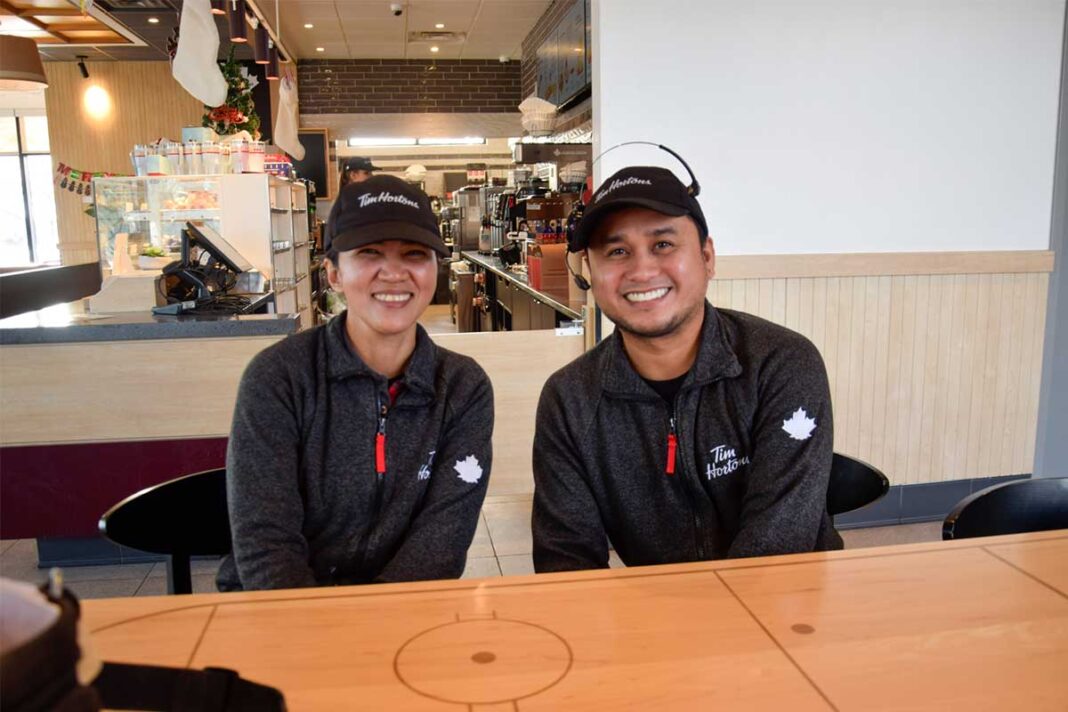
We began our journey of cultural discovery at the Tim Hortons outlet in Little Current, where we sat down with Sophia, Christopher and Ben.
“All the families are there,” said Sophie, “We celebrate with our extended families. It’s like a reunion every Christmas.”

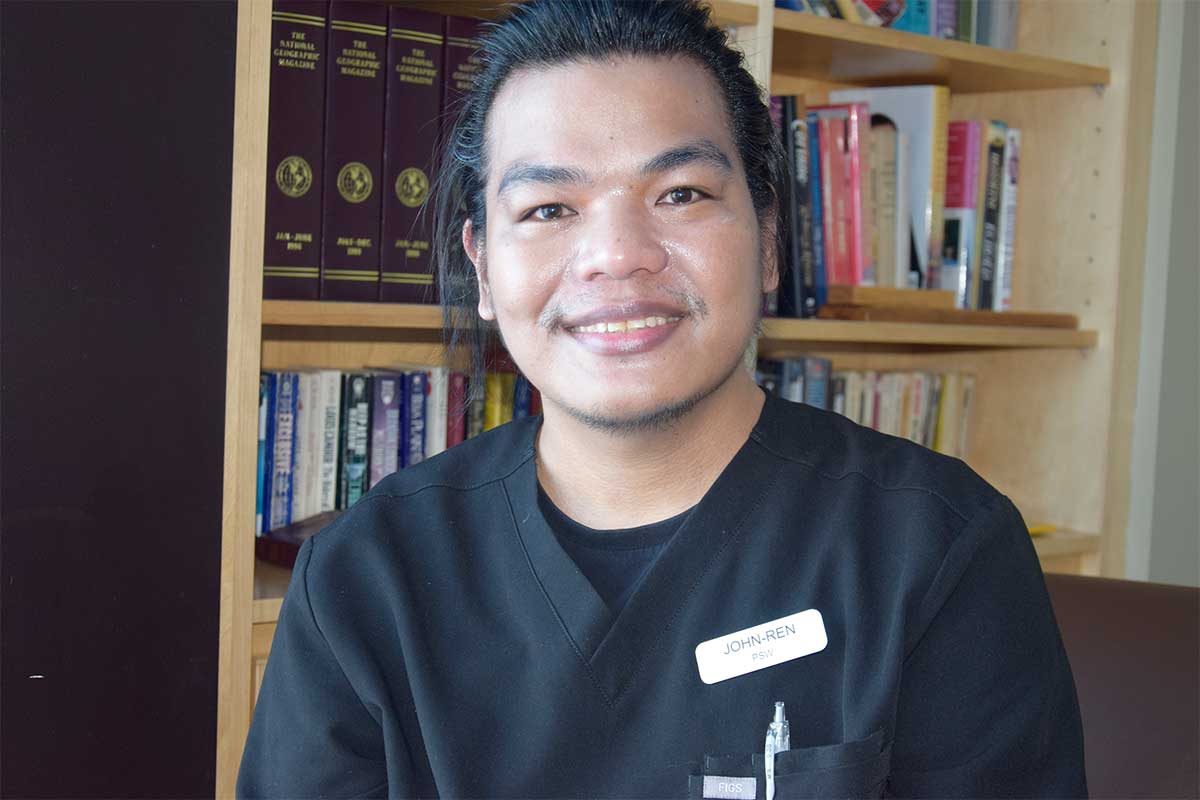
photo by Michael Erskine
“In all our culture, we celebrate Christmas, very early,” shared Christopher. “Like, in September.”
“We decorate and then we play Christmas music at that time starting in September,” said Sophia, “while we decorate all our houses.”
“We noticed that here in Canada you celebrate after Remembrance Day,” noted Christopher.
Many of the cultural Christmas practices centre on the religious aspects of Christmas, noted each of the people The Expositor interviewed. Particularly striking is the tradition of Simbang Gabi (or more playfully, Misa de Gallo, aka Rooster’s Mass), where many Filipinos attend a series of nine masses in the early morning hours leading up to Christmas, with the masses taking part well before the sun comes up. The main language in the Philippines is Tagalog—although there are a host of other languages and dialects throughout the country.
Roman Catholicism is the dominant religion in the Philippines, with over 80 percent identifying as Catholic and some nine percent other denominations—making the Philippines the only country in Asia where Christianity reigns, the closest second, at around 10 percent are Muslims.
“We have the dawn masses,” said Sophia, “it starts on December 16, and it ends on the eve of December 25, so it’s like, a Novena mass for Roman Catholics,” said Sophia. “So, we do it early at around four o’clock in the morning.” “Yeah, before the sun comes up, yes,” agreed Christopher. There is a special motive for the early morning devotions, however.
“If you attend all of them, you get a special wish,” noted Ben. “Because you did a Novena, you did a sacrifice or something, your wish comes true.”
Food, like in most cultures, plays a central role in Philippine Christmas traditions—with a bit of a surprising twist.
“We usually prepare spaghetti,” said Christopher (sweet Filipino spaghetti is a big favourite with many people). “Sweets, a lot of sweet rice cakes (bibingka and puto bumbong), salads, fruit salads and all,” said Sophia. But Christopher’s favourite is the roast beef.”
“I like the sweet ones, like coconut salad,” said Sophia, “Oh yeah, yeah, coconut is really good,” agrees Christopher.
Bibingka and puto bumbong can usually be found at street vendor stalls throughout the nine-day Noche Buena feast days Noche Buena.
Much like Quebecois traditions (and most Francophone Canadians) Filipinos tend to do their gift exchange and main Christmas dinner on Christmas Eve.
Sophia, Christopher and Ben have been in Canada for four years now. The past year has been challenging for Ben, as his wife and children were with him in Canada for the first three years. Then the temporary foreign worker program rules changed about a year ago and his family had to return to the Philippines. He is hoping his new application will enable them to come to Canada once more.
Among the strictures with the program are also that the workers on permit must stay working at the same employer. “So, we have to work only one to one employer,” noted Christopher.
Manitoulin Centennial Manor personal support worker John-Ren has been in Canada for around two years. He does have family here, “cousins and an uncle in Edmonton, Alberta,” he said. More than a bit of a jaunt to go visit.
John-Ren also describes his homeland’s Christmas traditions as a vibrant mix of faith, family and festivity, kicking off as early as September with the “ber” months. One of his favourite Christmas gifts as a child was receiving one of the iconic star-shaped lanterns called Parols, along with festive carolling, the aforementioned elaborate Noche Buena feasts with foods like bibingka, but also honouring godparents (ninongs/ninangs) and the exchanging gifts through Monito Monita (a Filipino version of Secret Santa).
John-Ren also looked forward to receiving a special moon-themed decoration each year. “I’m getting my favorite Christmas house decoration because I love the moon so something, so I look forward to receiving something connected with the moon.”
John-Ren’s Christmas message to Manitoulin Island is that “whatever you are, wherever you are, or the things that you are experiencing right now, be kind to people, because you never know what they are experiencing,” he said. “So, just be kind and give a smile to everybody, that can make a difference to the people you meet.”
“Spread kindness,” said Christopher, whose message to the Island community is almost word-for-word the same as that of John-Ren. “That is the most important. You don’t know what the person is going through in life.” “Kindness and generosity,” agreed Sophia. “In the Filipino community we do that a lot. So, whenever someone is new here, so someone is recommending something, if we’re helping find them somewhere to stay for accommodation or something and/or we can stay by them, because sometimes, coming here alone, they need company.”
“Someone to guide you; it’s important,” said Christopher.
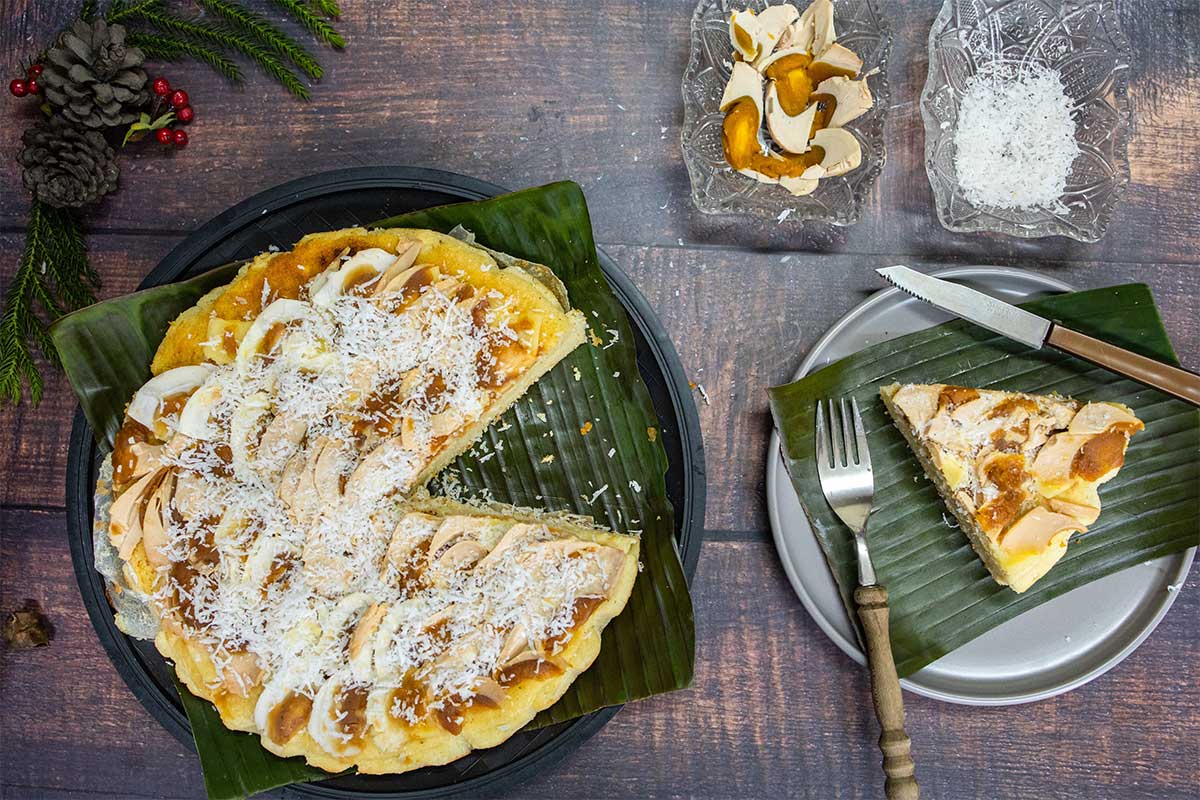
Bibingka is a favourite Christmas recipe from the Philippines
Shutterstock
Perhaps the most recognizable Filipino Christmas food is bibingka. If you’re looking for Christmas breakfast ideas, this is a great dish to try because the sweet treat is often enjoyed for breakfast instead of as a dessert.
Batter:
1 cup rice flour
¼ cup all-purpose flour
½ cup sugar
¾ cup fresh milk
¼ cup water
2 teaspoons baking powder
¼ teaspoon salt
4 tablespoons vegetable oil
1 egg
Toppings:
grated cheese
grated coconut
1 salted egg – cut into 8 to 12 thin slices
butter – melted at room temperature for brushing
Cut circles from the banana leaves for lining the pans. It should be double the size in diameter of the pans/molds or enough to cover the bottom and sides with a bit of excess as they tend to shrink when heated. Cut another batch of banana leaves for the top cover. Rinse and pat dry the banana leaves. Run each leaf quickly over the fire to make them limb and pliable.
Line the pans/molds with banana leaves and brush them with butter. Set aside.
Combine all the ingredients for the batter in a bowl and mix well with a spoon or whisk until mixture becomes smooth. The batter should normally be runny.
Divide the mixture into the pans/molds. Be sure not to fill more than half of each pan/mold with the mixture as it will rise while baking. Add 2-3 slices of salted egg on each. Arrange them on the baking sheet and bake at 200°C/390°F in the middle rack for 10 minutes. Remove the sheet from the oven. Place prepared banana sheets brushed with butter on top of each pan/mold with the buttered part facing down. Put them back in the oven but this time on the top rack. If using a gas oven, turn on the top heat (grill/broil function). Bake for another 5 minutes or until nicely charred.
Once done, remove from oven and brush each Bibingka with butter. Then top them with grated cheese and grated coconut. Serve while warm!
The perfect complement for bibingka is puto bumbong
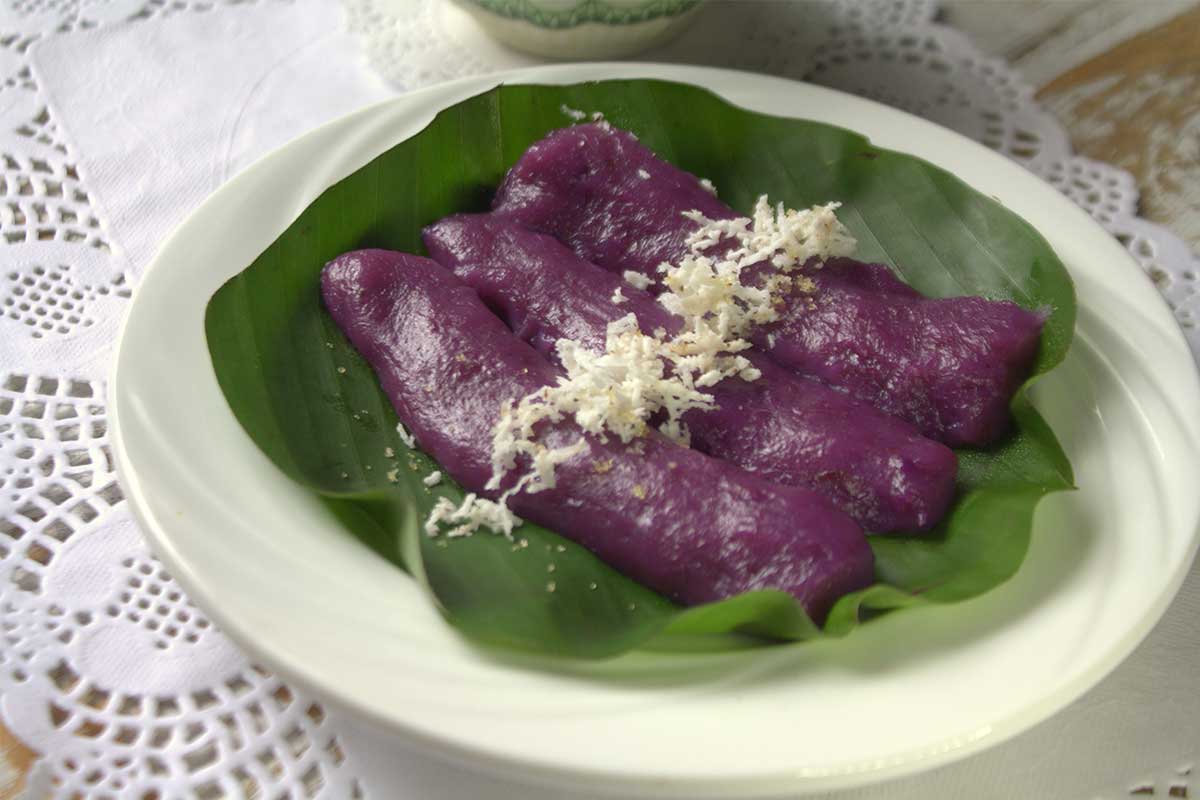
Shutterstock
You cannot make bibingka without making another iconic Filipino Christmas food called puto bumbong. This dessert is easily recognizable thanks to its bright purple colour.
More traditional versions of this dessert are made with pirurutong (black rice), but the purple version has become the most common variety. This sweet treat features sticky rice cake that has been stuffed into bamboo tubes and steamed.
Once cooked, it’s usually topped with melted butter, sugar and grated coconut. This is another of the Filipino desserts that may also be topped with grated cheese.
For the puto bumbong:
1 cup glutinous rice flour
6 tablespoons water
¼ teaspoon violet liquid food colour
or ube flavouring
Aluminum foil cut into small
rectangular shapes (approx.
4 inches long).
For the Toppings:
Butter or margarine for brushing
½ cup freshly grated coconut or
desiccated coconut
3 tablespoons brown or
muscovado sugar
Grated cheese (optional)
Instructions:
Prepare the mixture: In a bowl, combine the glutinous rice flour, water, and food colouring. Mix well with a spoon, then use your hands to break up any clumps until the mixture resembles a sandy or coarse grain texture.
Shape the foil molds: Brush the inside of your cut aluminum foil pieces generously with butter or margarine. Shape each piece of foil into a long, thin log or container.
Fill and seal: Fill each shaped foil container with the rice mixture. Gently press down the mixture to form a log shape, but do not compress it too tightly, as steam needs to pass through.
Steam: Heat your steamer until the water is boiling rapidly. Place the wrapped puto bumbong logs into the steamer.
Cook: Steam for approximately 10 to 15 minutes, or until cooked through and firm.
Unwrap and top: Turn off the heat and let the logs cool slightly. Carefully unwrap the puto bumbong from the foil and arrange on a plate or banana leaf.
Finish and serve: Brush the top and sides of each puto bumbong with more butter or margarine. Top with the grated coconut, brown sugar, and grated cheese if desired.
Serve immediately and enjoy this traditional Filipino treat!